Morocco Packing Guide for Solo Travellers
Wondering what to take to Morocco on your solo adventure? Discover everything you need to bring (and what you can leave at home) in this Morocco packing guide for solo travellers.
Deciding what to pack for Morocco isn’t easy, particularly if you’re travelling to multiple destinations. But I’m here to help, with more than 10 years of experience to draw on in creating my Morocco packing guide.
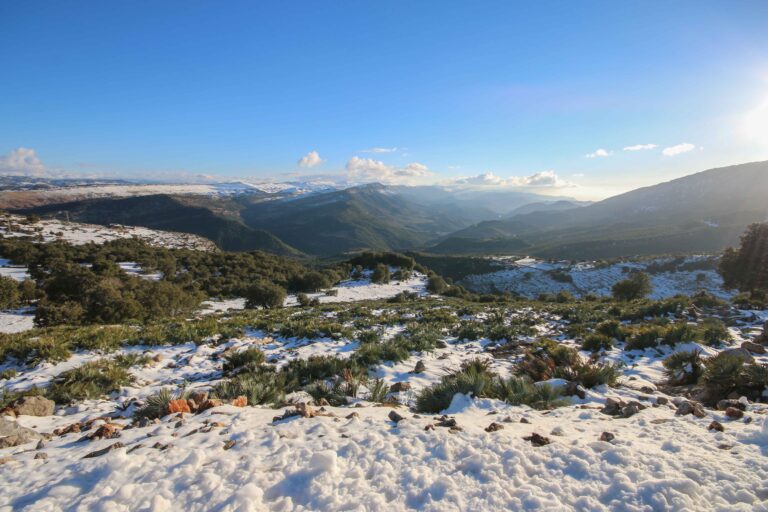
This North African nation takes in sun-drenched coastal towns and spectacular desert landscapes, as well as the snowy peaks and mountain villages of the High Atlas.
Marrakech can be sweltering at the height of summer, with the heat radiating off the medina walls. Meanwhile, Chefchaouen will see you reaching for your woolliest sweater in the winter months.
So how can you decide what to pack for Morocco and what to leave at home?
In this Morocco packing list, I’ve detailed everything you might need, from shoes to clothing and accessories.
Thinking about renting a car in Morocco? Check out my detailed guide with everything you need to know as a solo traveller.
Disclosure: This article contains affiliate links, meaning I earn a small commission when you make a purchase. Affiliate links cost you nothing and ensure my content stays free!
Dressing respectfully in Morocco
It’s worth stating that Morocco is a predominantly Muslim country. As such, dressing conservatively is the expectation for both men and women. Once you arrive, you’ll notice that almost everyone covers their shoulders and knees, men included!
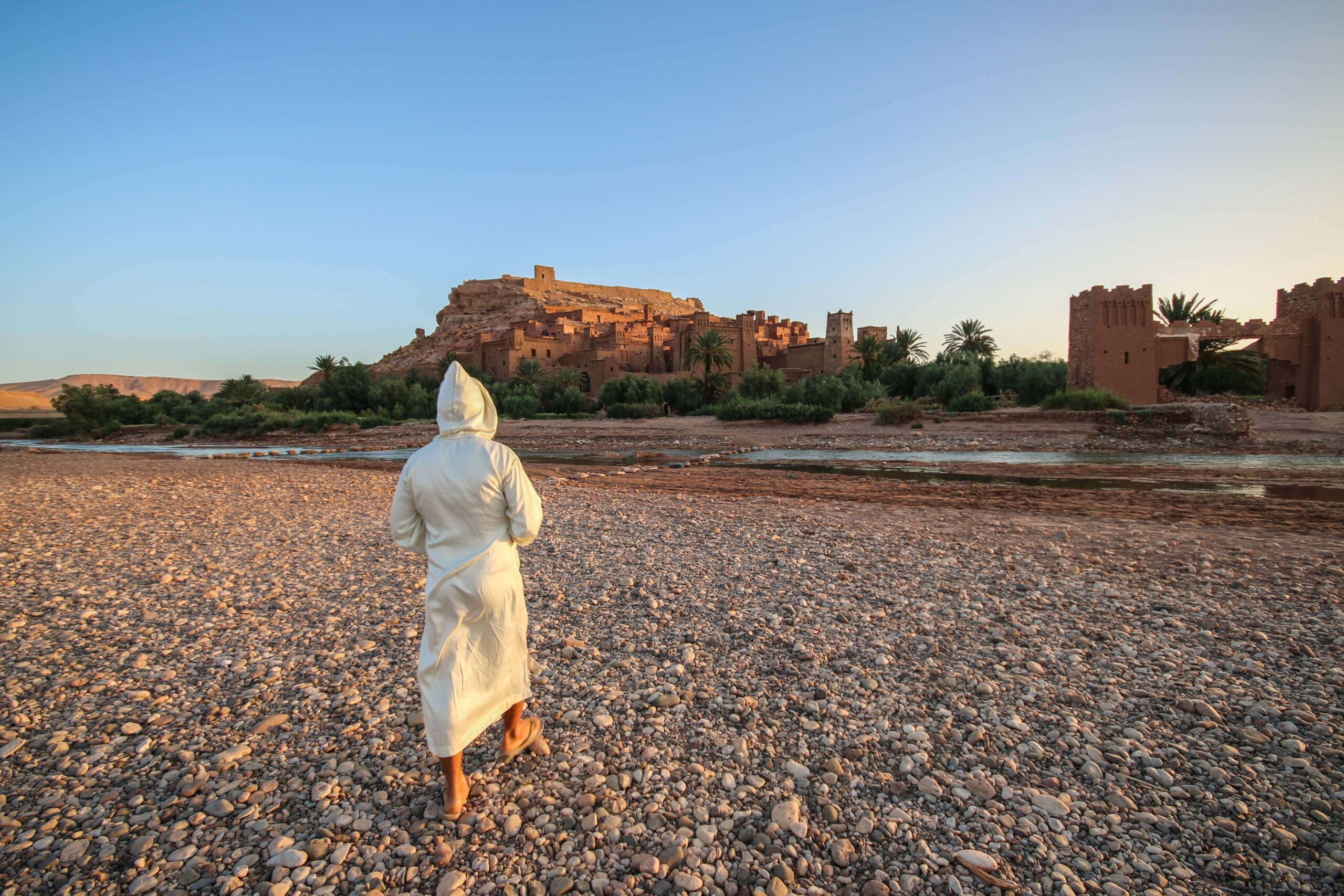
Some women will wear a hijab, others won’t. Many people will wear djellabas, a hooded caftan that can be plain or really decorative. Others will wear more “western” clothing, such as a suit and tie.
That being said, people are quite open-minded when it comes to the way tourists dress. Provided they aren’t flaunting too much skin! Remember, Morocco’s conservative dress code applies to both men and women.
Top tip:
As a solo traveller (and as a woman), I don’t want to attract too much attention. It’s just not my travel style. A simple way of doing this is dressing in line with local customs and taking my cues from Moroccan women.
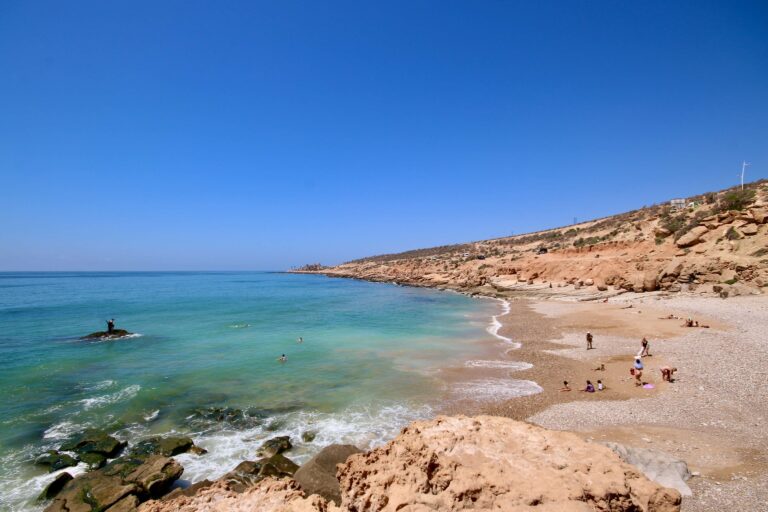
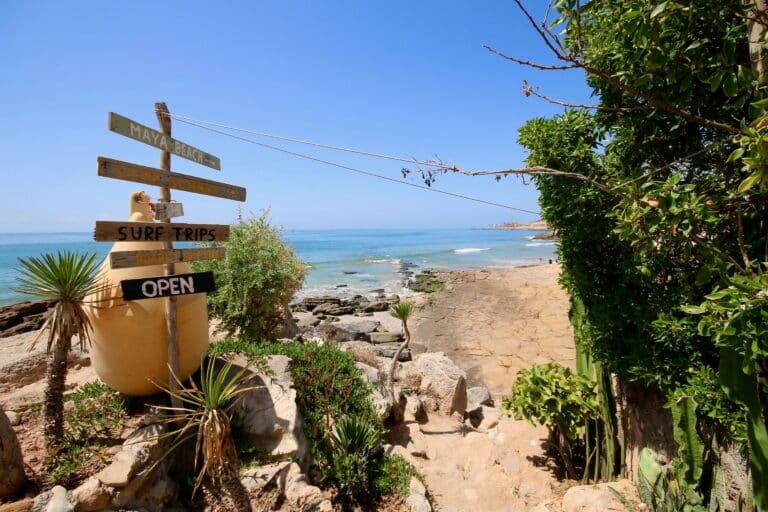
After travelling to all corners of Morocco, I’ve realised that what is acceptable dress for tourists in one destination might not be in another. For example, on the beaches of Taghazout, the surf guides are so used to seeing tourists in bikinis that they don’t bat an eyelid.
But if you’re visiting a local market, many of which are frequented by elderly people, some from remote villages, it’s expected that you cover up.
If you want to visit sacred sites, such as mosques, you will need to follow the dress code. This means covering below the knees and over the shoulders (and everything in between).
At the end of the day, you are free to wear whatever you want, wherever you want. But I always recommend respecting the local culture and avoiding walking around in tiny shorts and with an exposed midriff.
For more information about cultural etiquette in Morocco, check out my detailed article here.
What to pack for Morocco: Clothing
- Sandals/flip flops: Even in the wintertime, some Moroccan cities are warm enough for open-toed shoes. This allows your feet to breathe during long days spent sightseeing. Sandals/flip flops are also great for getting around your hotel or riad.
- Trainers/sneakers: A pair of comfortable trainers is a “must”. They’re useful not only for city explorations but also if you end up on mountain hiking trails. If you’re doing a serious trek, upgrade these to a pair of supportive hiking boots.
- Socks/underwear: Pack enough of each to cover a week-long stay, with the idea that you can do a load of washing partway through your trip.
- Loose trousers: Jeans are fine during the cooler months. But if you’re visiting in the summertime, you’ll want something loose to be comfortable in the heat.
- Leggings: Leggings are perfectly acceptable in Morocco if you have a long top above that covers your behind. They can also be worn beneath loose trousers on colder nights for extra warmth.
- Long skirts: A long, flowing skirt is great in the heat, as it allows for airflow while still keeping your legs covered.
- Maxi/midi dresses: Rather than short/mini dresses, opt for something with a little more length that isn’t too figure-hugging.
- Shorts: While shorts aren’t ideal in the cities or in remote towns/villages, they are generally acceptable on beaches in touristy coastal destinations such as Essaouira, Agadir and Taghazout. Rather than something that’s super short, go for a mid-length version (this applies to both men and women).
- Tank tops/singlets: In some parts of Morocco (particularly along the coast), exposing your shoulders as a foreigner won’t turn any heads. Pack a few tank tops/singlets that can be worn underneath other layers or with a scarf wrapped around your shoulders.
- T-shirts: Offering a bit more coverage, t-shirts are the perfect piece of upper clothing when travelling in Morocco.
- Long-sleeve shirts: These are ideal when visiting mosques or other sacred sites where being covered up is mandatory. Opt for lightweight cotton, linen or hemp for the best breathability.
- Jumper/hoodie: Outside of the summer months and up in the mountains (and even in the desert), temperatures can get chilly, particularly at night. Pack at least one warm upper layer to be on the safe side.
- Jacket: Depending on what time of year you are visiting Morocco (and where you’re planning to go), a rain jacket may be necessary. If you’re hiking in the mountains or visiting Chefchaouen in the wintertime, expect some rain.
What to pack for Morocco: Accessories
- Scarf: A scarf is a versatile accessory that can be used to cover your shoulders when visiting mosques. Additionally, it will provide warmth around your neck when it gets chilly.
- Swimsuit/surfsuit: If you’re visiting the coast or staying at a riad with a swimming pool, then a swimsuit is essential! For those hitting the waves around Taghazout, a surf suit is also a good idea. Particularly if you don’t like the idea of wearing a hired wetsuit.
- Lightweight towel: Most riads and hotels will provide you with a towel. But it’s a good idea to bring a lightweight, quick-dry one for use at the beach.
- Broad-rimmed hat: The sun can be intense in Morocco. So be sure to pack some kind of headwear to keep the rays off your face, neck and ears.
- Sunglasses: As with visiting any travel destination, a good pair of sunglasses will help to protect your eyes so you can see everything you want to see!
- Cross-body bag/bumbag/money belt: Morocco is generally a safe travel destination. But it’s always a good idea to keep your valuables close to your body to avoid pickpockets, particularly in markets and souks. Something that can be zipped tightly shut is best, whether it’s beneath your clothes or above.
- Daypack: Bring a backpack that can comfortably fit your water bottle, a layer of clothing and any purchases you make throughout the day.
What to pack for Morocco: Toiletries
- Shampoo, conditioner and soap: Depending on where you are staying, you may need to pack your own shampoo, conditioner and soap. I love shampoo/conditioner bars for travel as they take up hardly any space.
- Insect repellant
- Sunscreen: I’m super sensitive to the sun and wear sunscreen on my face every day as the rays in Morocco can be quite intense. I’d recommend lathering up before leaving your hotel or riad and reapplying regularly if you’re enjoying a day at the beach.
- Lip balm
- Hand sanitiser: In the post-COVID world, hand sanitiser is essential and a great thing to have on hand before eating meals.
- Prescription medication, as well as paracetamol/aspirin and anti-diarrhea pills.
- Feminine hygiene products: Women should ensure they have enough sanitary products – tampons are particularly expensive in Morocco!
What to pack for Morocco: Extras
- International power adaptor: Morocco uses Type C plugs (two round pins). Depending on where you are travelling from, you may need to bring an international power adaptor if you want to use your electronics.
- Tissues: Public toilets in Morocco are not always equipped with toilet paper. I always carry a small packet of tissues to be on the safe side. These can always be purchased on arrival at corner stores.
- Documents: Aside from your passport and any visas required for entry into Morocco, print out a copy of your flight tickets.
- Travel insurance: It’s also a good idea to have a hard copy of your travel insurance (including the policy number and emergency contact details) in case anything happens to you. For more info about getting travel insurance for Morocco, check out my detailed article here.
PLAN YOUR TRIP WITH MY FAVOURITE RESOURCES:
Find hotels via Booking
Book tours and attractions via Viator or GetYourGuide
Find a rental car via Discover Cars
Book flights via Kiwi or Booking
Search for buses and trains via 12Go or Omio
Get travel insurance via SafetyWing
Buy a digital eSIM with Airalo
By purchasing through my links, you’ll be supporting my website at no additional cost to you
-
Is December a Good Time to Visit Morocco? A Solo Traveller’s Guide
December in Morocco is a bit of a mixed bag. It can be crisp, sunny days beneath snow-dusted mountains. Or it can (as 2025 taught us during the AFCON tournament) be grey skies and heavy rainfall. If the last 10 years in Morocco has taught me anything, it’s that December is a month of contrasts:…
-
Is November a Good Time to Visit Morocco? A Solo Traveller’s Guide
If you’re considering a solo trip to Morocco in November, you’re looking at one of the country’s most underrated months. In my opinion at least! There’s usually a bit of a lull in tourist numbers following the idyllic weather of early autumn and before the influx of people who arrive at the end of December. …
-
Is October a Good Time to Visit Morocco? A Solo Traveller’s Guide
If you’re planning a solo trip to Morocco, October is considered by many people to be one of the best months to go. And I have to agree! The intense summer heat has eased and the Sahara once again becomes accessible. Oh, and the Atlantic waters are still warm enough to swim if you’re craving a…
-
Is September a Good Time to Visit Morocco? A Solo Traveller’s Guide
If you’re planning a solo trip to Morocco and debating when to go, September might be the sweet spot you didn’t know you were looking for. The extreme heart of summer is beginning to fade and peak-season crowds are starting to thin out. But the ocean’s still warm enough to swim and the desert’s becoming…
-
Is August a Good Time to Visit Morocco? A Solo Traveller’s Guide
If you’re considering a solo trip to Morocco in August, you’ve probably got one big question on your mind: Is it too hot? The honest answer: it depends on where you go and what kind of experience you’re looking for. Personally, August isn’t one of my favourite months to be in Morocco. But that’s because…
-
Solo Travel Morocco: Dealing with Harassment and Street Attention
One of the most searched questions about solo travel in Morocco (particularly from women) isn’t about riads, souk shopping or desert tours. It’s about harassment and catcalling in the street. I’ve experienced it personally and I know how upsetting it can be. It makes you feel unsafe (even when it’s not malicious) and it stops…
I’m Malika, an Australian-born travel writer with an intense love for Morocco. I first travelled here solo in 2014 and after meeting (and marrying) a local, I made this North African gem my home.
Over the last 10 years, I have explored the country extensively, travelling to all corners with my partner, friends and solo.