Solo Travel Morocco: Dealing with Harassment and Street Attention
One of the most searched questions about solo travel in Morocco (particularly from women) isn’t about riads, souk shopping or desert tours. It’s about harassment and catcalling in the street.
I’ve experienced it personally and I know how upsetting it can be. It makes you feel unsafe (even when it’s not malicious) and it stops you from being able to explore the country with your heart and mind completely open.
I also know that many Moroccans are upset that their country has this reputation, as it doesn’t reflect the broader population. My husband always expresses how ashamed he feels about his countrymen behaving this way when stories of street harassment come up in conversation.
It’s important to note that this behaviour is from a few (loud and vocal) men. Men who think it’s funny to make inappropriate comments toward female tourists, mostly to impress their friends.
In reality, it shows a lack of respect and is doing far more harm to Moroccan tourism than good.
Unfortunately, the truth is that many solo travellers (especially women) will experience some level of unwanted street attention in Morocco.
For some, it’s mild and manageable. For others, it’s tiring or uncomfortable. Rarely is it dangerous, but it can feel confronting if you’re unprepared.
It’s also worth noting that street harassment in Morocco is more likely in certain cities (the worst I’ve experienced was in Marrakech). In other places, it’s almost non-existent.
I don’t think the “threat” of being catcalled in Morocco should stop you from visiting. Honestly, it’s all bark and no bite. And I would highly encourage you not to let the actions of these “bad apples” tarnish your perception of Moroccans in general.
In this article, I’ll explain everything you need to know about street harassment in Morocco so you know what to expect. I’ll also share some of my top tips for handling street attention in Morocco and solo travel safety advice.
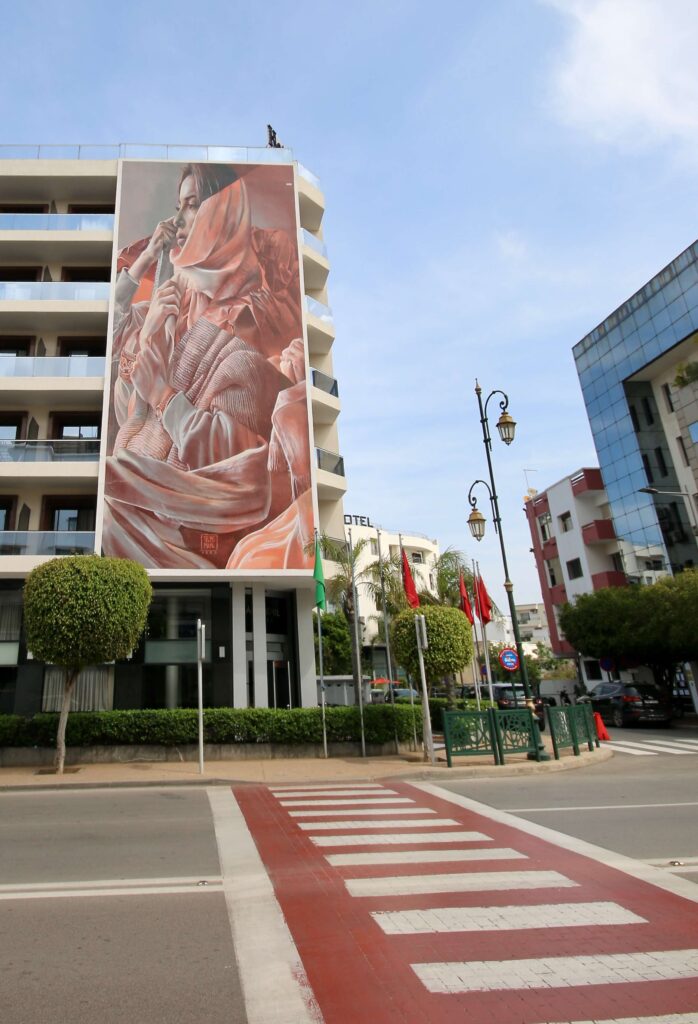
Disclosure: This article may contain affiliate links, meaning I earn a small commission when you make a purchase. Affiliate links cost you nothing and ensure my content stays free!
Moroccan Street Attention in Context
Morocco has a strong street culture and many aspects of daily life take place outdoors. Cafes spill onto pavements. Shop vendors socialise outside their stores. Public spaces are lively and conversational.
What can feel like targeted attention is sometimes simply the fact that you are visible, especially if you stand out as a non-Moroccan woman. Sometimes, they want your attention so you will buy something from their store.
In many cases, the same men who are making comments toward female tourists will also heckle passing (male) friends. Rarely will they do the same to Moroccan women, however.
I don’t say any of this to diminish the discomfort and even threat some people feel when unsolicited comments are directed at them. It’s important not to minimise that.
But it’s equally important not to conflate discomfort with danger…and derail your entire Morocco trip as a result! Sometimes, simply reframing these things can make them easier to handle.
As I said before, it’s (mostly) all bark and no bite. In my experience, men who catcall in Morocco are doing so to impress their friends, rather than actually threaten female tourists. But it doesn’t always feel like that in the moment.
In terms of violent and sexual crimes, Morocco is generally safe. Street harassment, while incredibly frustrating, is male “show ponying” or “peacocking”.
Who Is Likely to Experience Street Harassment in Morocco?
Solo female travellers tend to experience the highest level of street attention, particularly in busy medinas and tourist-heavy areas.
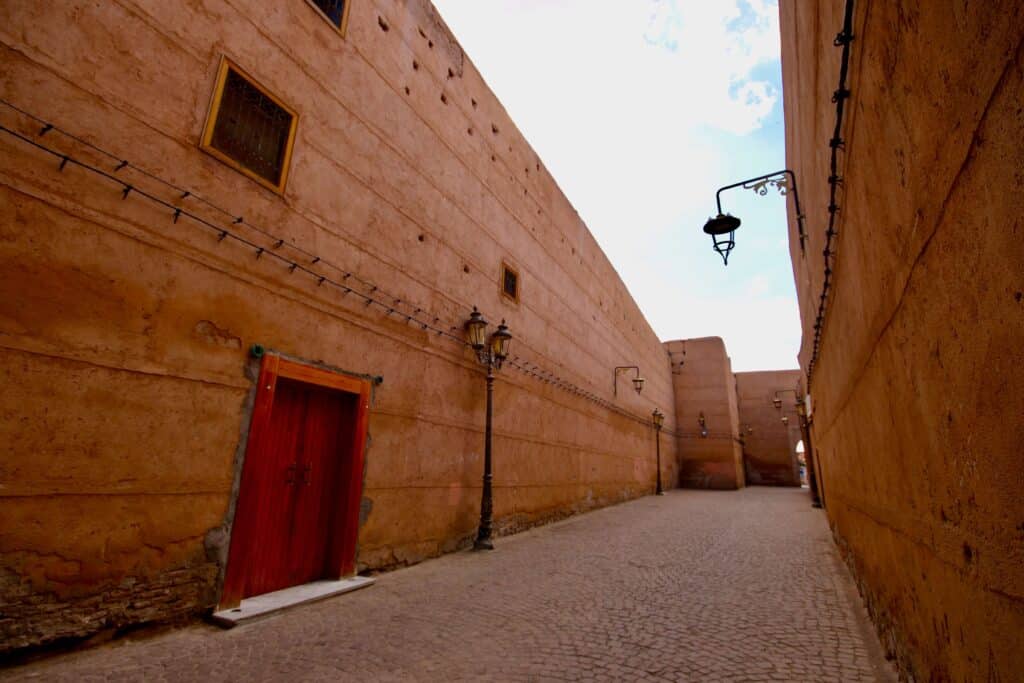
For me, the Marrakech medina was the worst place I have experienced harassment in Morocco, with Fes coming in a close second. I also experienced some catcalling from teenagers last year in Tangier – I guess they were modelling behaviour observed from older men.
But I have also heard accounts of foreign women (including expats) being harassed in various Casablanca neighbourhoods.
When I lived in the beachside villages of Taghazout and Tamraght, I never experienced any harassment. The men living there (many of whom worked as surf guides) were so used to seeing female tourists in bikinis and beachwear. It just wasn’t a novelty.
From my perspective, I also think the men in these villages have cultivated a culture that doesn’t tolerate harassment of tourists. After all, if you’re not getting a positive reaction from your mates for catcalling women, what’s the point in doing it?
This shows that male allies are often the most powerful in combating street harassment of female tourists in Morocco. If they call it out or show that it’s not acceptable, it will eventually die out.
And I do think it will die out eventually. I still remember the catcalling that used to go on in Australia in the late 90s and early 00s, particularly around construction sites. Now, it hardly ever happens, because men understand that it’s not okay and other men hold them to account.
The Most Effective Response(s)
Wondering how to deal with street harassment in Morocco? In most situations, I find the most effective strategy is simple. Don’t engage with anyone who is making you feel uncomfortable and simply walk on by.
Walk with purpose (even if you’re lost). If you do need directions, step into a shop, hotel or cafe to ask, rather than pausing in the middle of a busy street.
Wearing headphones (even without music playing) can help to reduce unwanted interaction. Just pretend you don’t hear the catcalling and they don’t get the satisfaction of making you feel uncomfortable.
If you’re someone who doesn’t like to ignore people, a firm “La, shukran” (“No, thank you”) delivered without breaking stride is a good alternative. I find it’s more effective than smiling out of politeness (which can invite further attention) or engaging in an argument.
In many cases, confidence is more powerful than confrontation.
However, I also understand that many women don’t want to let these situations slide. Instead, they want to draw attention to bad behaviour from men. If this is you, then all power to you!
In Morocco, I think the best strategy is to emphasize that the behaviour is shameful. Question how they would feel if someone treated their sister or mother in the same way.
My sisters-in-law introduced me to the term “hchouma“, which translates to “shame”, but implies something that is almost taboo. If you want a clear, one-word comeback, this is a great option!
Holding someone to account in Darija (when it’s not your language) can be quite powerful. It also implies you’re more culturally connected than they probably thought.
Disclaimer:
I want to advise against any form of confrontation if the encounter is not in a public area with witnesses around. Nobody’s safety is guaranteed and there’s no telling what an individual might do if there aren’t onlookers there to hold them to account.
What About Clothing?
I feel like clothing and street harassment in Morocco is a contentious issue.
On the one hand, I think women should be able to wear whatever they want without being made to feel uncomfortable. At the same time, I do think tourists (both men and women) should dress with respect to local customs in Morocco.
Many people in Morocco (particularly older generations) just aren’t used to seeing a lot of skin…and for them, it can be confronting or even upsetting. And respecting elders is really important in Moroccan culture (as it should be everywhere).
When it comes to avoiding street harassment, dressing modestly isn’t necessarily going to exempt you. I’ve heard lots of reports from female tourists who were “covered up” and still got catcalled.
But it can reduce attention in conservative areas. In some places, there’s an (ill-informed) idea that dressing in short shorts or low-cut tops means a woman is “fair game”, which is absolutely not okay.
My advice for women is to take your lead from local women and wear loose-fitting long pants or a flowing skirt. Avoid tops that show a lot of cleavage or expose your midriff – a tee or shoulder-covering shirt is a better option.
In coastal towns and beach areas, standards are more relaxed. Yes, you can wear bathers or a bikini on the sand and in the water. But traditional neighbourhoods, medinas and local markets are a different kettle of fish.
When Street Harassment in Morocco Crosses the Line
While most unwanted interactions with men in Morocco are verbal and non-threatening, you should trust your instincts if something feels wrong.
If someone starts following you persistently after you’ve indicated you don’t want to engage or they touch you/block your path, then you don’t have the option to simply walk away.
If that happens, I recommend entering the nearest shop, restaurant or riad/hotel. Shopkeepers and staff are generally very protective of tourists. They don’t want to see Morocco’s reputation dragged through the mud by the actions of a few individuals. It threatens their livelihoods directly.
Moroccan police presence in tourist areas is usually strong. They might be in plain clothes, so you may not initially notice them. But authorities do take tourism safety seriously and they will act if you make a complaint.
Whenever I’ve found myself in an uncomfortable situation, just the mention of police or gendarmes usually makes the aggressor back down. I usually reach for my phone in the process, giving the impression that I have someone high-ranking on speed dial!
In Morocco, there can be severe repercussions for doing the wrong thing, not only for the culprit but also for their family. In short, nobody wants to end up in police custody. So use that threat to your advantage.
The Mental Fatigue Factor
I want to highlight the emotional load that comes with experiencing street harassment while travelling, no matter where you are in the world. Different people will experience this to different degrees…and for some, it’s really heavy.
Repeated small interactions (even harmless ones) can feel draining, particularly when you’re travelling solo. In fact, even one catcalling episode can create anxiety.
So be gentle on yourself and don’t hesitate to retreat to your riad or hotel if you need a break.
And don’t feel like this is “hiding”! I think sitting on a rooftop terrace listening to the sounds of the medina or reading a book in a riad courtyard are both quintessential Moroccan experiences.
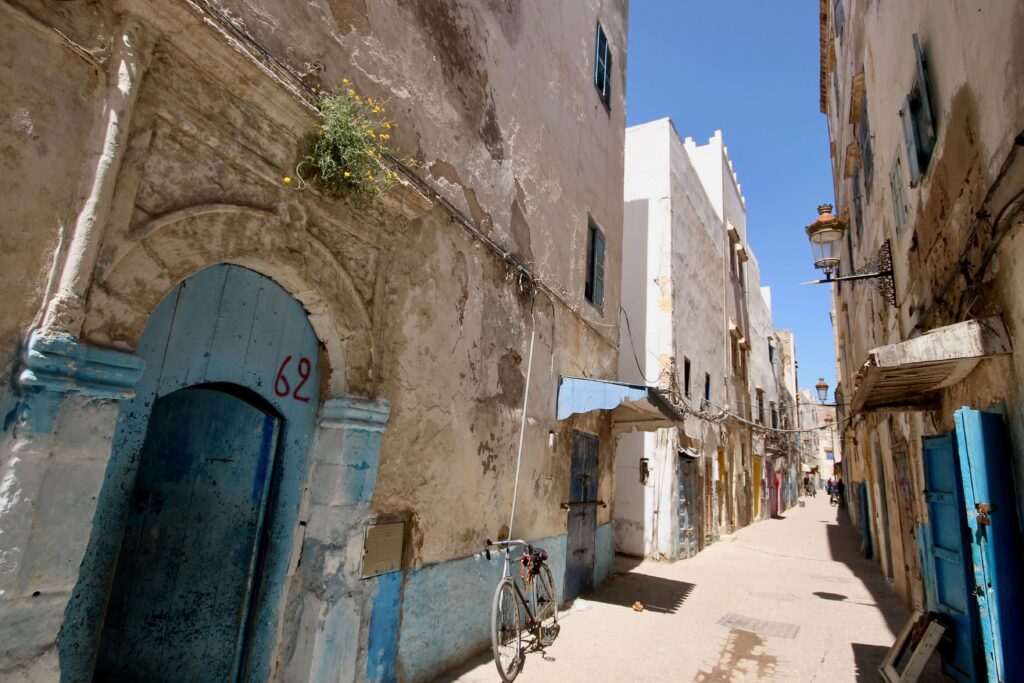
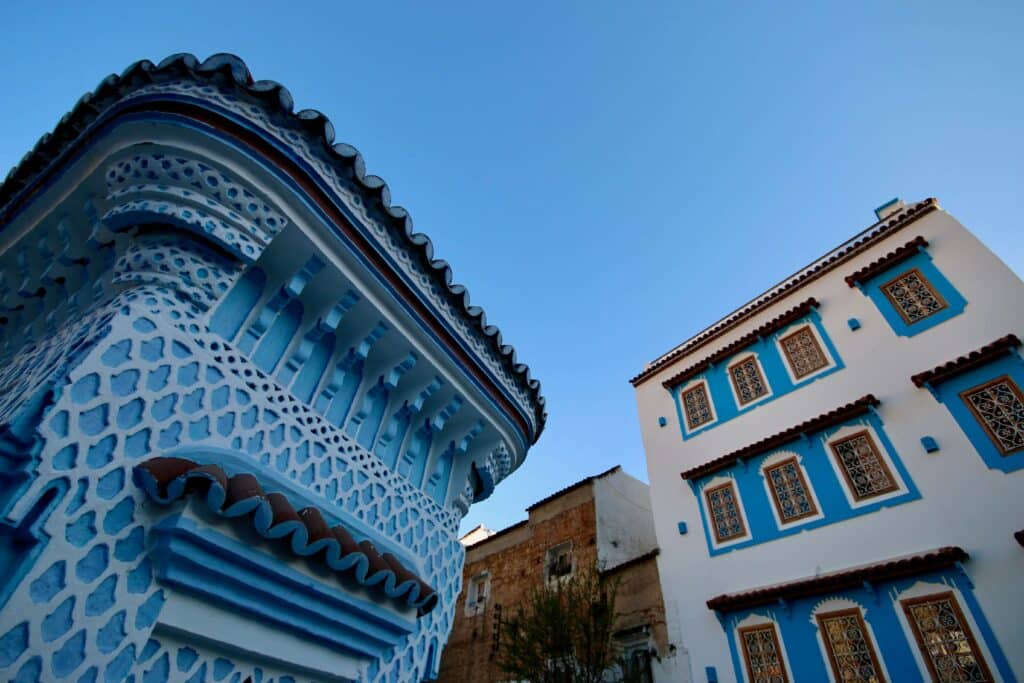
For me personally, cities like Essaouira, Rabat and Chefchaouen often feel significantly more relaxed than Marrakech and Fes.
So if you’re starting your Morocco itinerary in one of these two cities, don’t feel like this is going to be your experience throughout the whole country. You can, effectively, travel your way out of it!
When to Join a Group Tour
As I said earlier, not everyone is equipped to handle street harassment while travelling and for some women, it can be really debilitating.
I’ve been in forums where women have reported being catcalled after arriving in Marrakech and are now questioning whether they should continue their journey in Morocco at all. Others ask if they should consider joining a tour to feel safer.
I think tours are a great option for anyone who knows that street harassment in Morocco is going to make them feel anxious. Some women know ahead of time that they don’t have the confidence to handle it alone.
You can also join a guided tour after arriving in Morocco if you realise that travelling solo is not going to be your cup of tea.
On a guided tour, you always have a local (usually a man) who is “on your side,” and he will quickly shut down any situations that make his guests feel uncomfortable. In all likelihood, catcalling and harassment won’t occur in the first place when you’re being chaperoned by a guide.
It’s also possible to do parts of your trip solo and parts with a group.
Some solo travellers choose guided medina tours or group excursions in busier cities (check out some of my top picks in Marrakech, Essaouira and Fes). Not because they can’t manage alone, but because it offers a respite from constant negotiation and attention.
Others prefer a multi-day guided tour for the duration of their time in the country. Aside from addressing safety concerns, tours like these offer lots of benefits in terms of transport logistics, language barriers and accommodation bookings.
If you’re not sure whether a guided tour or going solo is right for you, I weigh up the pros and cons in my detailed article here.
Street Harassment in Morocco: Maintaining Perspective
It’s important to hold two truths at once. Street harassment in Morocco exists and can be really uncomfortable. The majority of Moroccans are extraordinarily hospitable, warm and generous.
In my experience, for every frustrating interaction I’ve had in Morocco, there have been multiple moments of kindness. Invitations for tea and Friday couscous, shopkeepers looking out for my wellbeing and genuine help from complete strangers.
Getting catcalled can be incredibly frustrating and emotionally draining. Sometimes, it can be interpreted as threatening your safety. But it’s usually manageable if you display a sense of calm confidence and just get on with whatever you are doing.
At the end of the day, it’s the perpetrators’ problem. It’s not your responsibility to fix their poor behaviour….and you shouldn’t let it stop you from having an amazing time in Morocco.
Eventually, there will come a point in time where street harassment becomes completely unacceptable. And from hearing the perspectives of many Moroccan men, I think the tide is already turning.
PLAN YOUR TRIP WITH MY FAVOURITE RESOURCES:
Find hotels via Booking
Book tours and attractions via Viator or GetYourGuide
Find a rental car via Discover Cars
Book flights via Kiwi or Booking
Search for buses and trains via 12Go or Omio
Get travel insurance via SafetyWing
Buy a digital eSIM with Airalo
By purchasing through my links, you’ll be supporting my website at no additional cost to you
-
Is December a Good Time to Visit Morocco? A Solo Traveller’s Guide
December in Morocco is a bit of a mixed bag. It can be crisp, sunny days beneath snow-dusted mountains. Or it can (as 2025 taught us during the AFCON tournament) be grey skies and heavy rainfall. If the last 10 years in Morocco has taught me anything, it’s that December is a month of contrasts:…
-
Is November a Good Time to Visit Morocco? A Solo Traveller’s Guide
If you’re considering a solo trip to Morocco in November, you’re looking at one of the country’s most underrated months. In my opinion at least! There’s usually a bit of a lull in tourist numbers following the idyllic weather of early autumn and before the influx of people who arrive at the end of December. …
-
Is October a Good Time to Visit Morocco? A Solo Traveller’s Guide
If you’re planning a solo trip to Morocco, October is considered by many people to be one of the best months to go. And I have to agree! The intense summer heat has eased and the Sahara once again becomes accessible. Oh, and the Atlantic waters are still warm enough to swim if you’re craving a…
-
Is September a Good Time to Visit Morocco? A Solo Traveller’s Guide
If you’re planning a solo trip to Morocco and debating when to go, September might be the sweet spot you didn’t know you were looking for. The extreme heart of summer is beginning to fade and peak-season crowds are starting to thin out. But the ocean’s still warm enough to swim and the desert’s becoming…
-
Is August a Good Time to Visit Morocco? A Solo Traveller’s Guide
If you’re considering a solo trip to Morocco in August, you’ve probably got one big question on your mind: Is it too hot? The honest answer: it depends on where you go and what kind of experience you’re looking for. Personally, August isn’t one of my favourite months to be in Morocco. But that’s because…
-
Understanding the Moroccan Dirham: Currency, ATMs and Safety
There’s a lot to get your head around when travelling solo to a new country and currency is one of them! What is it? How much is it worth in relation to your home currency? And what is the best way to get your hands on it? As soon as you mention that the Moroccan…


I’m Malika, an Australian-born travel writer with an intense love for Morocco. I first travelled here solo in 2014 and after meeting (and marrying) a local, I made this North African gem my home.
Over the last 10 years, I have explored the country extensively, travelling to all corners with my partner, friends and solo.