From Souk to Home: How Ethical Souvenir Shopping Supports Moroccan Artisans
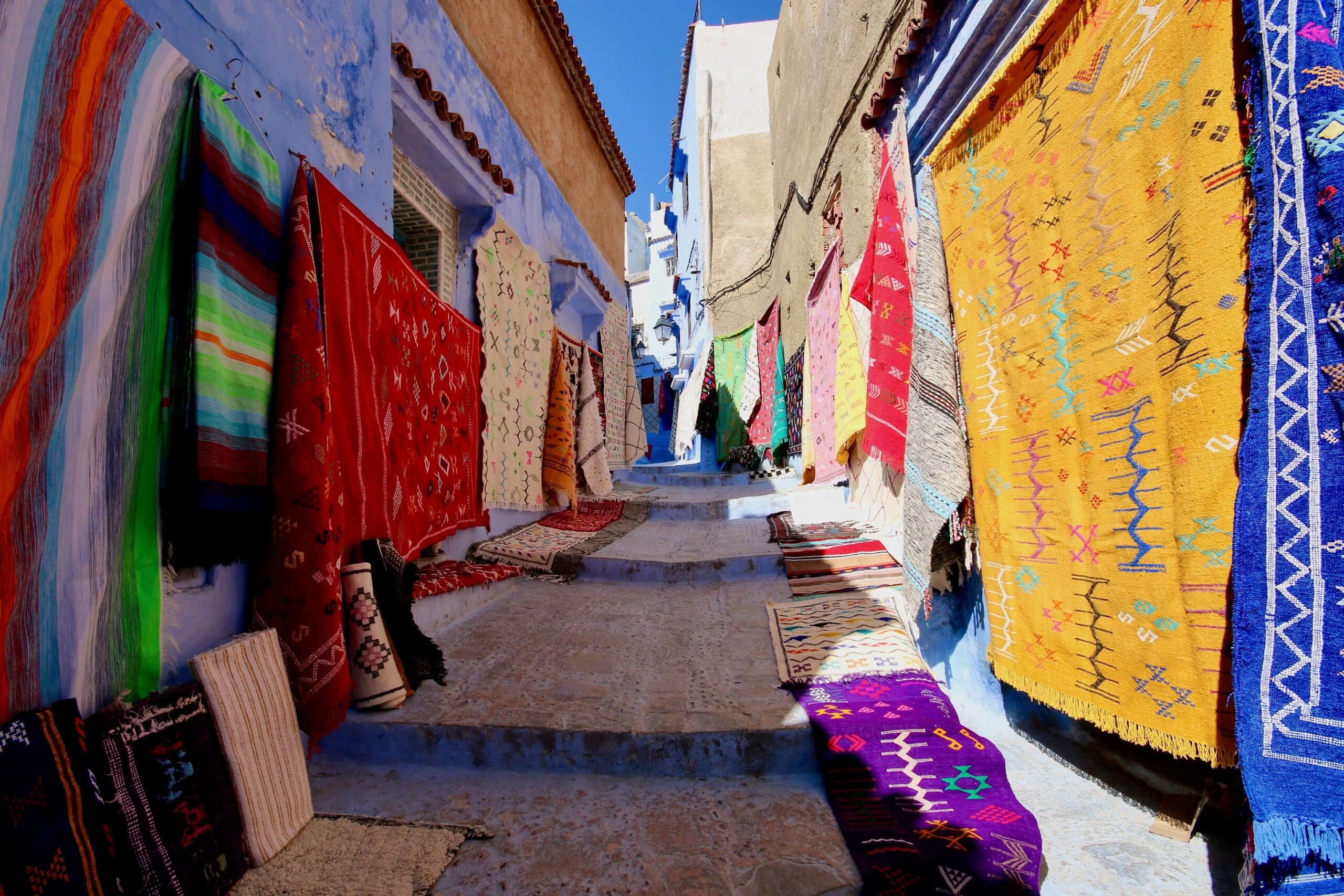
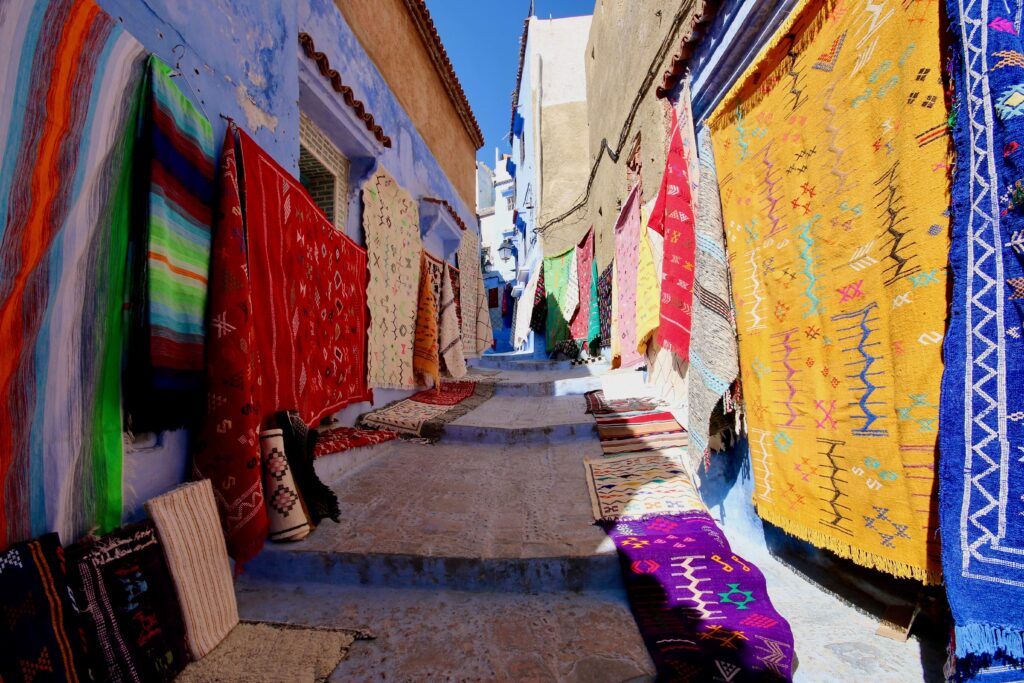
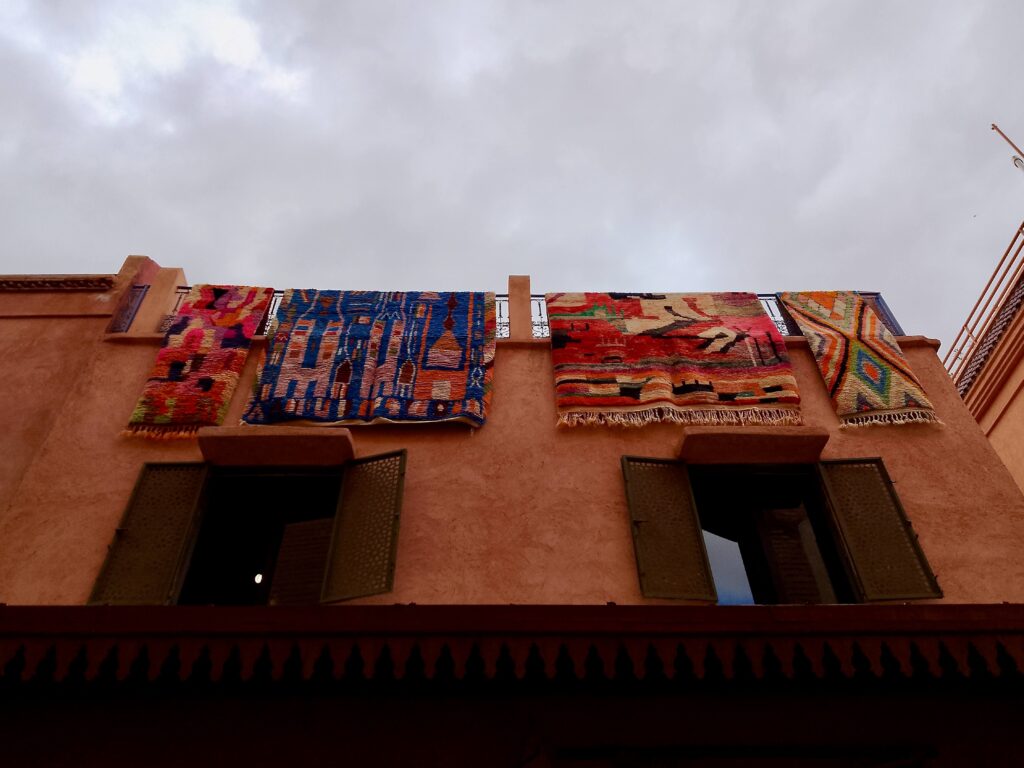
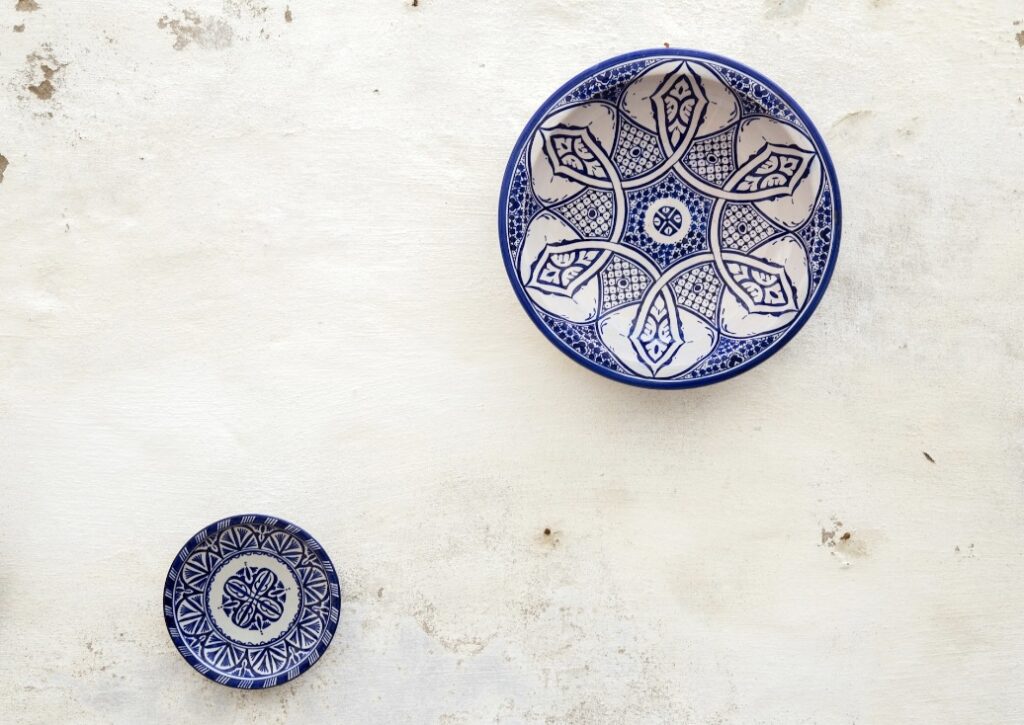
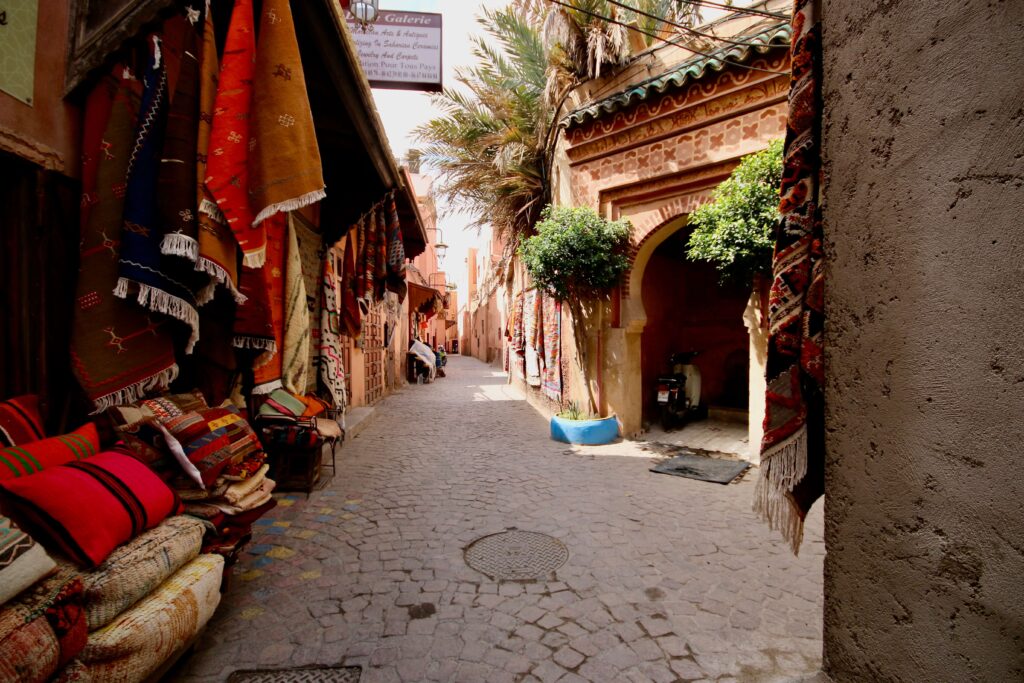
If you’re someone who loves beautiful homewares, Morocco’s souks are a dream. They’re overflowing with handmade rugs, filigreed brass lanterns and leather pouffes, not to mention colourful ceramics and gorgeous teapots….and teacups….and tea trays!
For solo travellers, Morocco’s souks can also feel overwhelming. I still remember the first time I stumbled into the Marrakech souks alone back in 2014. I didn’t know where to look and, at the same time, I wanted to buy everything. It really was sensory overload!
But over the years, I’ve realised that within all of the “chaos” lies an opportunity. Buying souvenirs in Morocco can become a form of cultural exchange and a meaningful way to support the artisans whose skills sustain these traditions.
In this article, I’ll explain exactly what I mean and how what we buy (and how we buy) can impact communities in remote and rural regions of Morocco.
From my perspective, ethical souvenir shopping in Morocco is not about buying and spending more. It’s about spending with awareness and being selective about what we take home.
Discover more tips for surviving Morocco’s souks in my detailed article here.
Disclosure: This article contains affiliate links, meaning I earn a small commission when you make a purchase. Affiliate links cost you nothing and ensure my content stays free!
Regional Specialties and Centuries-Old Skills
Generally speaking, Moroccan craftsmanship is regional. Certain parts of the country or particular towns are known for individual crafts.
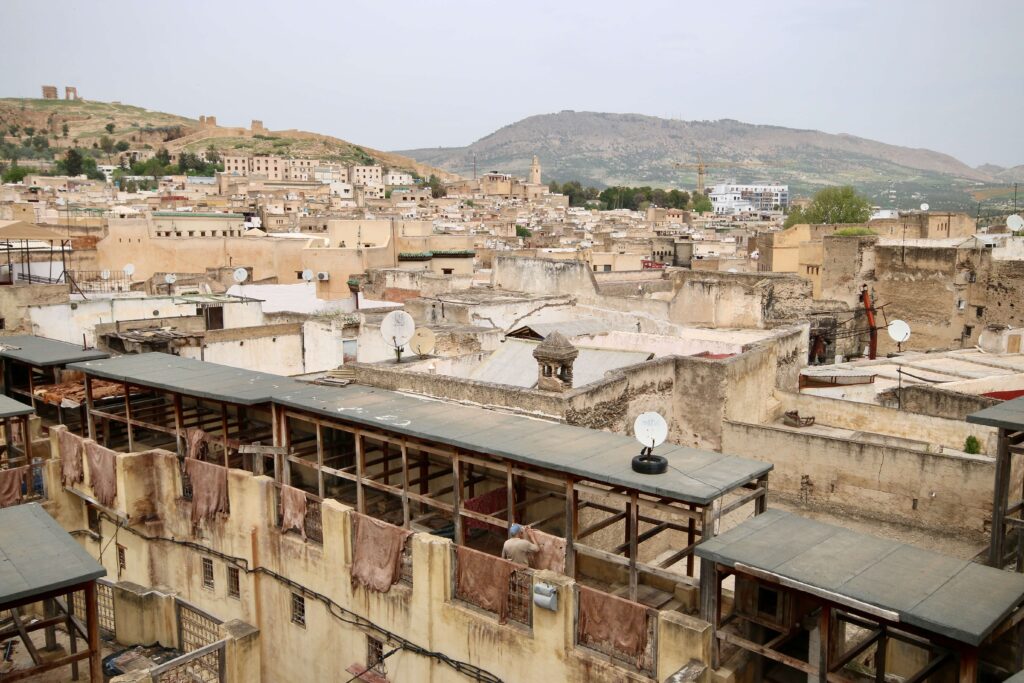
For example, Safi is known for its ceramics, Fes is famed for its leather tanneries and several Amazigh villages in the Atlas Mountains have centuries-old weaving traditions.
But when you’re shopping in a city-based souk, this is not always apparent. You might not know where the objects have come from and how they are linked to cultural heritage.
The fact is, many of these artisan skills have been passed down through generations and have long served as a livelihood for communities.
If you opt to buy mass-produced goods or imported replicas, that economic chain breaks.
People in rural areas who have spent years honing these traditional skills are the ones who lose out. And if there isn’t a market for artisan crafts, these skills will eventually be lost altogether.
Ethical shopping in Morocco begins with recognising craft as work – skilled, time-intensive and deserving of fair compensation. Just as you want your time and skills at work to be valued back home.
When you buy directly from artisans and cooperatives or pay a fair price for handmade products in city-based souks, you’re helping to strengthen craft traditions.
And in a world of mass-produced goods, factory efficiency and AI creations, I strongly believe that supporting artists and craftspeople is more important than ever.
Thinking about buying a handmade Moroccan rug? Discover some of the best places to make your purchase here.
Understanding the Souk Economy
Haggling is part of Moroccan market culture, but it’s often misunderstood. Negotiation here is not about “winning” or getting the lowest price imaginable (as tempting as that sometimes is if you’re travelling on a budget).
It’s about finding a price that respects the time and skills of the maker, as well as the entrepreneurship of the vendor. After all, the vendor is responsible for sourcing artisan goods (often from remote towns and villages) and making them accessible to buyers in city-based souks.
Aggressive bargaining that drives prices down below what is fair and reasonable may make you feel like you are “outwitting” the vendor. But in reality, you are undermining the true value of the object and the sustainability of the craft itself.
That’s not to say you need to agree to an inflated price if you feel that you are being exploited. You can politely walk away if that’s the case. The price needs to work for everyone.
And remember, the initial price quoted by the vendor will be high. This is completely normal (not them trying to take advantage of you). It’s just a starting point for negotiation.
Top tip:
My top tip for haggling in Moroccan souks is to have fun and do so with respect for the artisan and the vendor. Moroccans love to laugh! So if you smile, joke and be playful in your negotiations, it’s a fantastic opportunity to connect on a human level. Plus, the object you purchase will hold those positive memories of what is a quintessential Moroccan travel experience.
Women’s Cooperatives and Community Impact
Across Morocco, women-led cooperatives play an important role in ethical production and in the push for equality.
Not only are they helping to preserve traditional artisan skills in a rapidly globalised world. They are also creating economic independence for women and strengthening rural communities.
From argan oil collectives to weaving and embroidery groups, these organisations provide income, education and autonomy. Many are based in remote and rural regions where opportunities for women to earn money are few and far between.
Many cooperatives reinvest their profits into the communities they serve through funding for literacy initiatives, healthcare and education for girls.
When you support women’s cooperatives, the money you spend will likely remain within the local economy and create a significant social impact.
Many cooperatives welcome visitors, offering insight into the process behind the product. This is a fantastic opportunity to get a behind-the-scenes look at how traditional handicrafts are made and chat with Moroccan women.
Top tip:
If you don’t have the opportunity to travel outside Morocco’s cities to visit a cooperative, you can often find ethical souvenirs made by women in “ensemble artisanals”. These government-sponsored craft centres are found in several major cities and sell artisan goods at fixed prices that honour the makers’ skills.
You can learn more about women’s cooperatives in Morocco and how to visit them in my detailed article here.
Recognising Authentic, Handcrafted Goods
Unfortunately, Moroccan souks are not exempt from “fakes” and some products are manufactured en masse in factories abroad. As a result, ethical shopping in Morocco requires a little discernment.
How can you tell a fake from the real deal?
Handcrafted items often show small imperfections. They have variations in colour, shape or pattern that signal they were made at the hands of humans, not machinery. Mass-produced souvenirs tend to look identical and the materials often appear “cheap”.
If you’re not sure, shop around and look at similar products from different vendors. On first glance, it can be hard to know. But once you look closely at the “real deal” versus a “fake”, you’ll know!
Also, don’t be afraid to ask questions of the vendor. “Who made this and where?” can be a good starting point.
There’s also the option to go shopping in the souks with a guide, who will ensure you steer clear of anything that isn’t authentic.
Simply let them know what you’re interested in buying and that you want to shop ethically/support women’s coops/rural-based artisans. They will steer you in the right direction!
Quality Over Quantity
When shopping anywhere in the world, it’s easy to rank your shopping spree based on how much you come away with. Quantity over quality.
But ethical souvenir shopping in Morocco isn’t about filling a suitcase. It’s about being selective when deciding what to purchase and investing more in high-quality, handcrafted goods, rather than purchasing cheap imitations.
For me personally, one well-chosen piece carries more meaning than multiple trinkets. And when you invest in something handmade, it comes with a story – the story of the person who crafted it, the story of the artisan tradition and how it has shaped a community for generations.
Souvenirs also shape how cultures are represented beyond their borders. When an ethically sourced Moroccan craft enters your home abroad, it brings with it so much more than just aesthetics.
Take, for example, the rug I purchased in Tazenacht back in 2015. It has travelled with me to different homes around the world and serves as a daily reminder of Morocco, its artisan traditions and its people.
It’s so beautifully made that it looks just as gorgeous today as it did more than 10 years ago when I first laid eyes on it. And every time I look at it, I’m in awe of the weaving talents and skills of the women who crafted it.
Ethical Shopping as Cultural Respect
In Morocco, craftsmanship is often tied to identity, particularly in Amazigh communities. Buying ethically signals respect not only for the product, but for the culture that produced it and the traditions that birthed artisan crafts.
It also reframes shopping from consumption to connection. It’s not just a transaction but an exchange of cultural ideas and innovations.
And if you take the time to learn the history and story behind an object at the point of sale, I guarantee they will stay with you. Even after you transport that object to a completely different country and place it in a new home, its cultural connections aren’t lost.
So when you’re shopping in Morocco’s souks or at artisan cooperatives, don’t be afraid to ask questions. Take the time to learn about whose hands produced the objects and where they were made.
And most importantly, value the labour and skills that have gone into an object, just as much as the aesthetics of the object itself.
PLAN YOUR TRIP WITH MY FAVOURITE RESOURCES:
Find hotels via Booking
Book tours and attractions via Viator or GetYourGuide
Find a rental car via Discover Cars
Book flights via Kiwi or Booking
Search for buses and trains via 12Go or Omio
Get travel insurance via SafetyWing
Buy a digital eSIM with Airalo
By purchasing through my links, you’ll be supporting my website at no additional cost to you
-
How Many Days Do You Need in Morocco? Solo Travel Itinerary Ideas
“How many days do I need in Morocco?” is a question I get a lot…and it’s not easy to answer. Morocco is one of those countries where you can spend a long weekend exploring a single city or several weeks travelling the length and breadth of the country. Take your pick! But if I’m talking…
-
Morocco Solo Travel FAQs + Honest Answers
After travelling around Morocco for the last 10+ years, I think it can be an incredibly rewarding country to explore independently. Public transport is great, there’s a huge variety of experiences on offer and the cultural insights are endlessly fascinating. That said, it might not be the easiest country for solo travellers, particularly if we’re…
-
How to Handle Unwanted Attention in Morocco Respectfully
Something that always saddens me when reading through Morocco travel forums is the number of people who report receiving unwanted attention in the country. While there are always people who respond saying this didn’t worry them or that it was on par with what they’ve experienced in other countries, there are enough people who feel…
-
Using SIM Cards and Mobile Data in Morocco: A Solo Traveller’s Guide
When I first started travelling in my early 20s, smartphones didn’t exist and the internet was still incredibly expensive to access. I remember paying 2 USD per minute to check my emails in Cuba! It was the era of “Lonely Planet”. Almost everyone bought/borrowed one of these legendary guidebooks and they were a mainstay of…
-
The Unexpected Lessons Morocco Has Taught Me
I came to Morocco looking for adventure and, if I’m being honest, to tick another country off my bucket list. Back in 2014, I booked a one-way ticket expecting to whizz around the country for a few weeks before continuing on to South America. I’d travelled around Southern Africa, East Africa and West Africa before,…
-
What I Wish I Knew Before Travelling Solo in Morocco
While I’m now married to a local and live part-time between Morocco and Australia, the first time I visited was as a solo traveller. I’ve also travelled independently to all corners of Morocco in the years since – I just solo adventures! I could tell you that I was one of those people who had…


I’m Malika, an Australian-born travel writer with an intense love for Morocco. I first travelled here solo in 2014 and after meeting (and marrying) a local, I made this North African gem my home. Since that time, I have explored the country extensively, travelling to all corners with my partner, friends and on my own.
Morocco is an incredible destination and one that I think everyone who has the “travel bug” should experience. The scenery is spectacular, the medinas are enchanting and the locals are among the friendliest (and funniest) people I’ve ever met.
I also know that Morocco can feel intimidating for first-time solo travellers, especially given the amount of conflicting advice shared online. That’s why I’ve created this guide: to provide practical, balanced, and up-to-date advice based on my own experiences. My hope is that it helps you travel with confidence and enjoy everything this extraordinary country has to offer.