How Much Does Solo Travel in Morocco Really Cost?
An honest budget breakdown for travelling solo in Morocco before you book the flight.
Morocco has a reputation for being one of the most affordable destinations in North Africa. But if I’m being honest, things have gotten waaaaaay more expensive in recent years. But hasn’t everywhere?
When I first arrived from Australia in 2014, I would have considered Morocco a “cheap travel destination”. But these days, that’s up for debate!
That’s not to say it’s expensive. But you might be surprised by the cost of things like eating out, museum entry and activities, particularly in popular tourist hubs (ahem: Marrakech and Fes).
A few months ago, I had a reader email me to check whether the prices for Sahara activities they were being quoted sounded fair. They were surprised that they were equivalent to what they’d expect to pay in North America/Europe!
At the same time, there are still places in Morocco where the prices are “local” – you can eat cheaply and immerse yourself in the local culture for free. And I think so many of the country’s “best” experiences are the ones that cost absolutely nothing!
So how much does solo travel in Morocco really cost and can you afford it? This is something important to figure out before you book the flight.
The answer depends less on your budget and more on how you choose to travel and where you opt to stay.
Morocco can be incredibly affordable. But it can also drain your bank account, particularly if you’ve got a penchant for the finer things in life….or gorgeous homewares!
In this article, I’ll provide a realistic look at what a solo traveller can expect to spend when visiting Morocco, as well as some insider tips for keeping your budget in check.
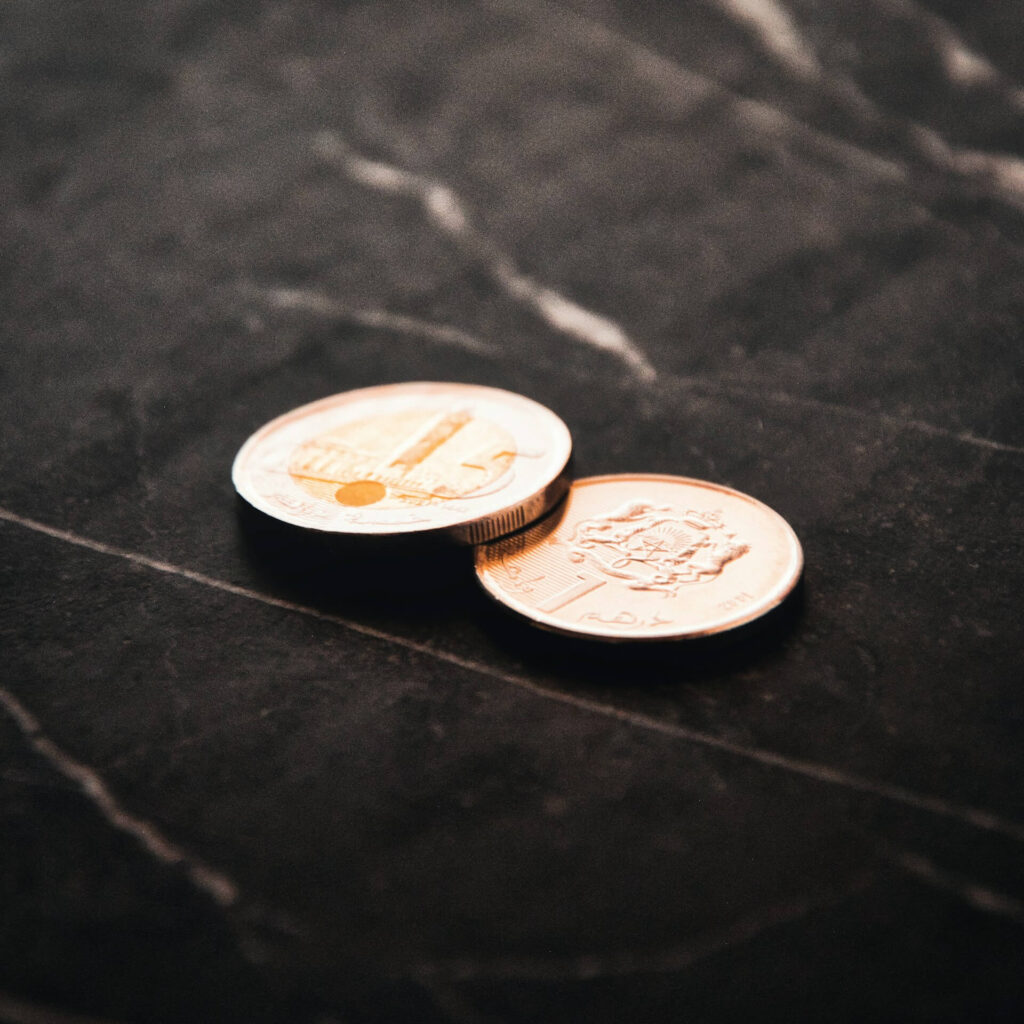
For the purpose of this article, I’m going to quote prices in Moroccan Dirham (MAD) and do some conversions to USD/EUR. At the time of writing, 1 USD/EUR is roughly equivalent to 10 MAD.
Disclosure: This article contains affiliate links, meaning I earn a small commission when you make a purchase. Affiliate links cost you nothing and ensure my content stays free!
The Daily Budget Breakdown
For most solo travellers to Morocco, you’ll be in one of three broad budget categories:
Budget Traveller: 35–60 USD/EUR per day
The experience: staying in hostel dorms or simple guesthouses, eating street food or at local restaurants, using public transportation, minimal paid activities.
Mid-Range Traveller: 70–150 USD/EUR per day
The experience: private rooms in riads, occasional guided tours, comfortable train travel and meals at both local cafes and tourist restaurants.
Luxury Traveller: 200+ USD/EUR per day
The experience: staying in boutique riads, desert glamping experiences, private transfers and high-end dining experiences.
Accommodation: The Biggest Variable
After flights, accommodation in Morocco is usually the largest expense for travellers. And for solo adventurers wanting a private room, it can end up costing more than if you’re travelling with a partner/friend.
But exactly how much it costs will depend on your tastes and comfort level. Are just looking for somewhere to crash at the end of the day or accommodation that’s an experience in itself?
In popular destinations like Marrakech and Fes, you can overnight in hostels with dorm beds, which cost between 100 and 250 MAD per night. Outside of the big cities, these are more difficult to find.
That being said, there’s still super affordable accommodation out there. But it’s more likely to be a basic private room with a shared bathroom.
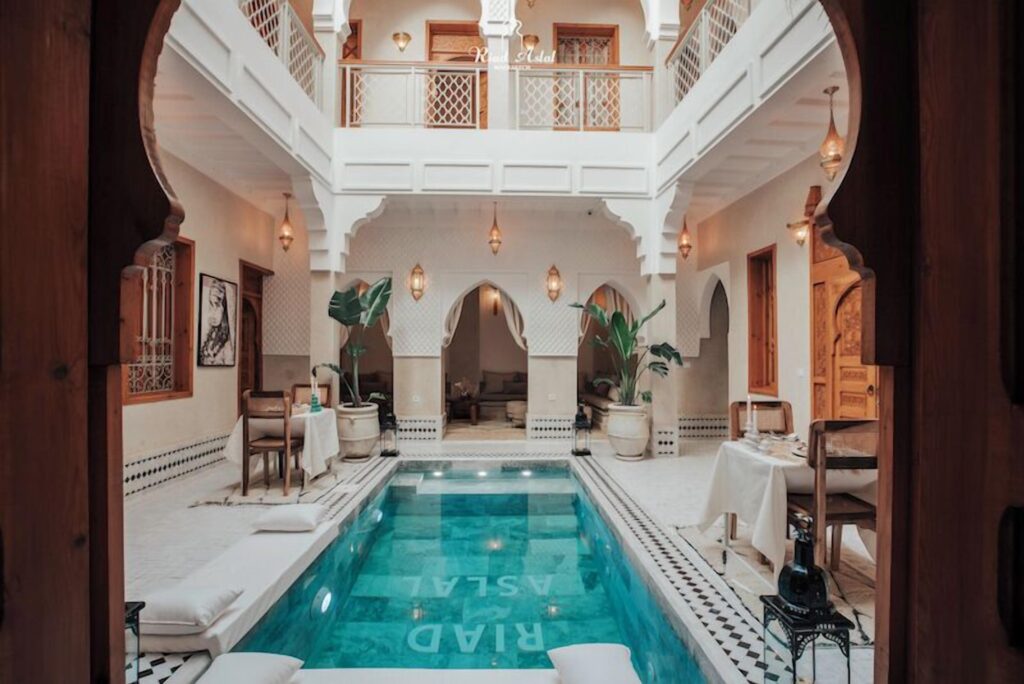
Mid-range rooms in traditional riads typically range from 400 to 1200 MAD per night, although I have paid more in high season.
Most include breakfast, which helps offset daily food expenses. And if you’ve travelled to Morocco before, you’ll know that breakfasts are usually generous in size.
One of the great things about staying in a riad as a solo traveller is that they’re usually small, which encourages socialisation. There’s a good chance you’ll end up chatting with fellow adventurers over breakfast or while sitting on the rooftop terrace.
Luxury riads in Morocco can easily exceed 2000 MAD per night (expect to pay 20,000+ MAD at the Royal Mansour). At the upper end of the spectrum, you can expect pool(s), spa facilities and private hammams, as well as multiple dining venues.
Top tip:
If you’re searching for accommodation in Morocco on platforms like Booking.com, look for single rooms designed specifically for solo travellers. Despite (usually) being a bit smaller, they’re almost always cheaper than their double equivalents – it just means you aren’t paying for space you don’t need.
Not all platforms allow you to filter results for “single rooms only”. If not, I use the “find” function in my top menu and search for “single” – it highlights any results on that page with the word “single” in it.
Food: Surprisingly Affordable
Sometimes the affordability of food in Morocco blows me away, particularly when we’re talking about street food. You can find sandwiches filled with spiced meat or eggs and veg for 15 MAD, as well as streetside vendors selling everything from soup to snails!
Bread from the local bakery or a corner store also costs next to nothing. My husband and I often buy bread, cheese and a tin of tuna when we’re on road trips and don’t want to stop for a full-blow meal. This keeps us going until we arrive at our destination.
If you prefer a sit-down meal, expect to pay between 50 and 150 MAD at a local restaurant. And by that, I mean somewhere that is catering primarily to locals, not tourists.
It’s hard to find places like these in the medinas of Marrakech and Fes, where the rental costs (pushed up by tourism) result in higher operating costs.
At restaurants catering primarily to tourists, expect to pay between 150 and 300 MAD per meal and even more if you’re visiting an Insta-famous rooftop restaurant.
Higher-end establishments are more in the 400+ MAD range while multi-course dinner shows start from around 800 MAD.
Top tip:
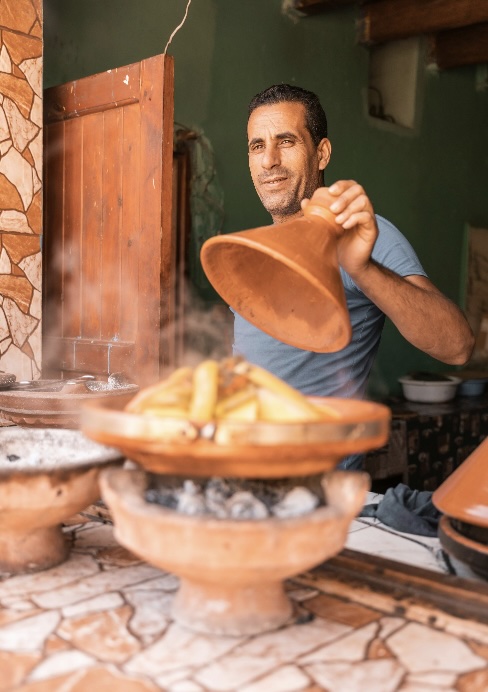
If you want a traditional Moroccan meal at a local restaurant, keep an eye out for places with tagines slow-cooking outside. Rather than ordering from a menu and waiting for the chef to make something from scratch (which can take a while), they already have tagines ready to go (or ready in a few minutes).
The best part? You get to peek inside the tagine and pick the one that appeals to you!
Transportation: Efficient and Affordable
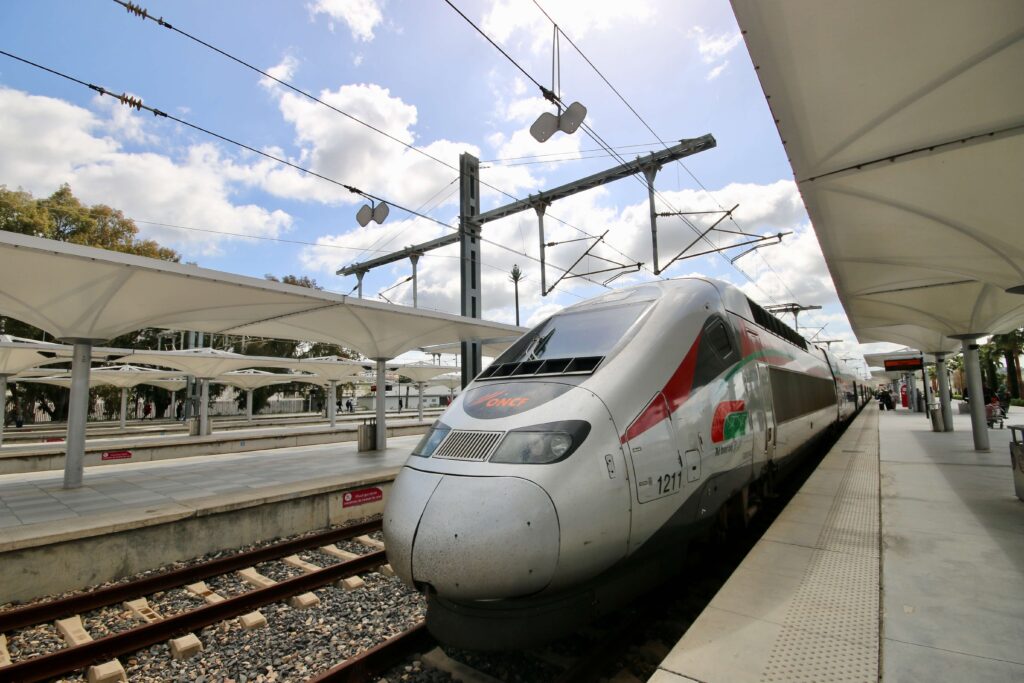
Morocco’s transportation network is one of the best in Africa….and I’m not just saying that because I’m married to a local. It really is good, with modern trains connecting major cities across the north and comfortable buses serving (almost) everywhere that’s not connected by rail.
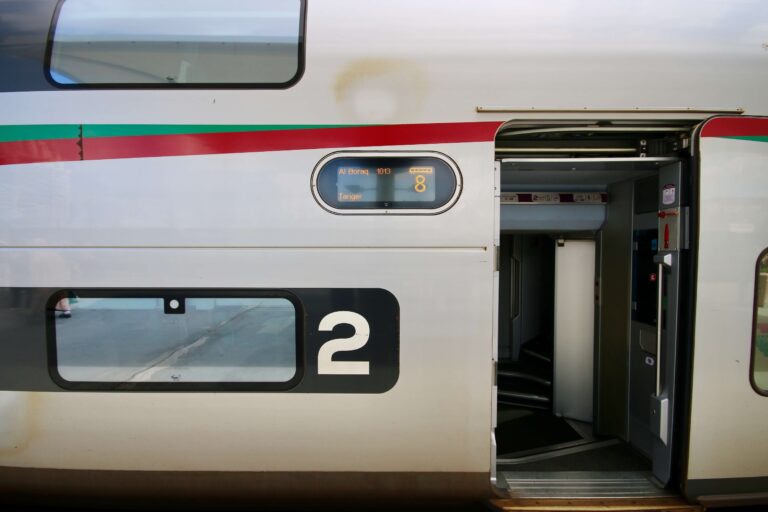
Oh, and if you haven’t heard, Morocco also has Africa’s first high-speed rail service – Al Boraq – which reaches speeds of over 300 km/h. It goes without saying this significantly cuts down travel times.
Typical train fares in Morocco range from:
- Marrakech to Casablanca: 100–200 MAD
- Casablanca to Rabat: 50–100 MAD
- Tangier to Marrakech: 350-500 MAD
Prices vary depending on whether you’re travelling first-class or second-class – the latter is more than comfortable enough, in my opinion. But you can splurge on a first-class ticket if you want a slightly quieter experience.
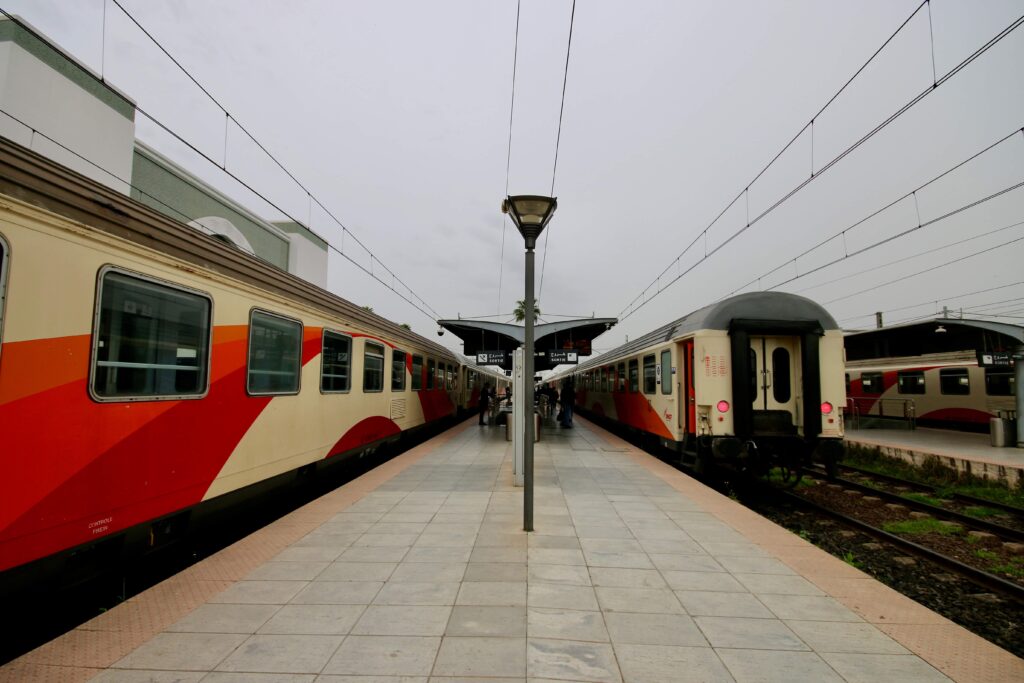
Long-distance buses are usually a bit cheaper than the train. So if you’re travelling on a tight budget, these are the way to go. CTM and Supratours are the two main companies used by tourists and their fares are comparable.
You can find cheaper buses. But they may not have reserved seating and some make lots of stops along the way, which increases the duration of the trip.
Grand taxi prices are on par with the buses, but they’re less comfortable, with four passengers across the back and two in the front (plus the driver). I only take grand taxis if the route isn’t served by a bus, such as the route that connects to Ait Benhaddou.
Within cities, petit taxis are affordable, but tourists aren’t always quoted affordable fares. Some (but not all) taxi drivers in Morocco inflate prices if they think they can get away with it.
I’ve even had one tampering with the meter during the journey to try and hike up the price. I didn’t let him get away with it!
Always ask the price of the taxi beforehand and if the driver says: “It’s metered”, still ask for a rough idea of what the journey will cost.
The amount of money you spend on transportation really will depend on how much of the country you’re exploring and whether you’re sticking to main routes.
If you’re thinking about venturing off the beaten track, then a rental car is the way to go. Hire cars in Morocco are quite affordable, with prices starting from around 200 MAD a day (+ petrol).
Whenever I’m looking to rent a car in Morocco, I always check out what’s available at Discover Cars. This user-friendly platform that lets you compare choices from both global car rental companies and local Moroccan providers, helping you secure the best deal. Additionally, they provide FREE cancellation, which is a wonderful perk considering plans can change at any moment.
The Sahara Desert Experience
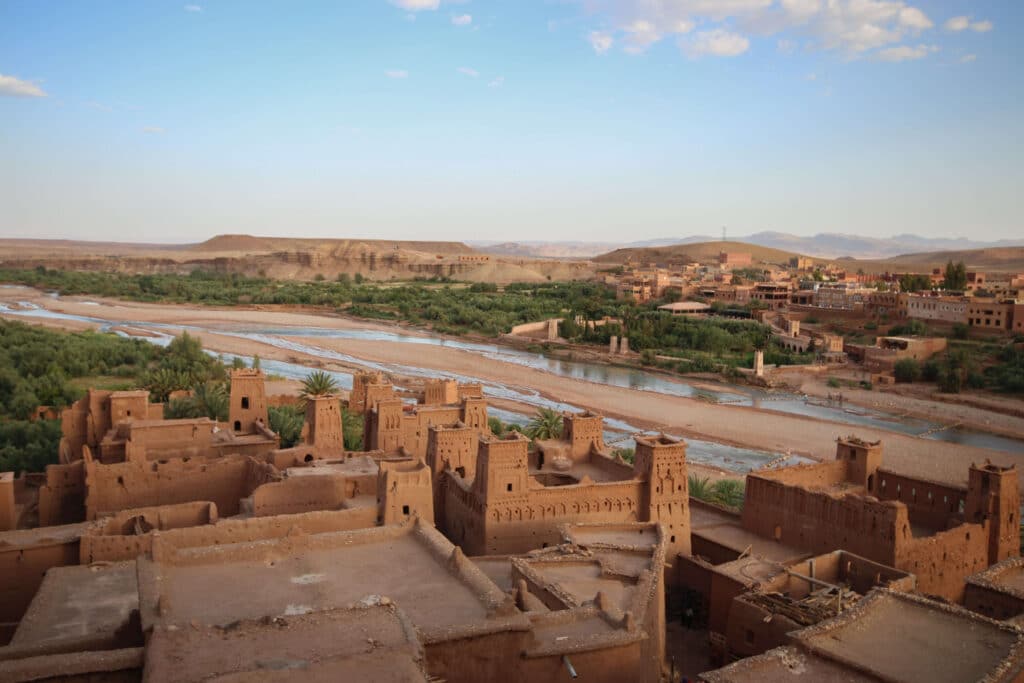
If you’re heading to the Sahara, it’s likely it will be the single largest expense of your Morocco trip. It’s a loooong way to travel from Marrakech or Fes and everything tends to cost a little more in the desert due to the transport miles involved.
But that doesn’t mean it has to be expensive.
In fact, shared desert tours usually cost anywhere from 1000 to 2500 MAD, depending on the comfort level you’re opting for and the number of nights.
At the budget end of the spectrum, you might have shared bathrooms at your desert camp and it might not feel quite as “remote” as those in the luxury range. But you’re staying in the same dunes and getting the same incredible starry night sky!
Private luxury Sahara tours can easily exceed 5000 MAD. But in my opinion, they’re worth it if you want a customised experience and the most comfortable digs in the desert. If it’s a once-in-a-lifetime adventure, why not splurge?
Most tours include transportation, accommodation and a guide, as well as most meals and a camel ride to reach your desert camp. Some will also include additional desert activities, such as sandboarding or quad biking.
Always check what is and isn’t included to make sure it’s like-for-like when comparing Sahara Desert tours.
Top tip:
If you have your heart set on visiting the Sahara Desert during your solo trip to Morocco, factor this expense into your budget early. It’s not cheap and could end up out of your budget if you treat it as an optional add-on.
Entrance Fees & Activities
Lots of travellers are surprised by the entrance prices for museums and historic buildings in Morocco…and I can see where they’re coming from.
Last time I visited Bahia Palace it cost 100 MAD to enter, even with plastic sheeting covering some sections due to ongoing restoration works.
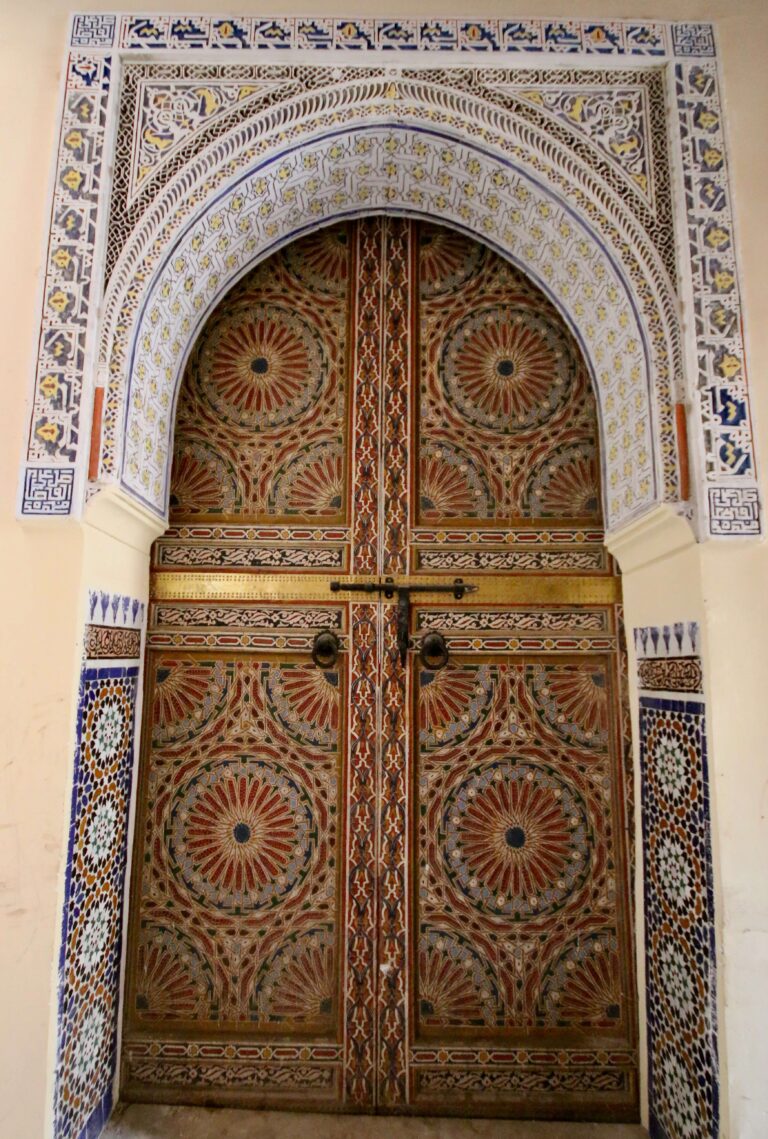
But it’s precisely because Morocco is carrying out expensive and time consuming restorations that I think these entrance prices are valid. It’s about preserving the country’s architectural heritage and employing skilled craftspeople who are keeping long-established traditions alive.
At the same time, there have been Moroccan museums I’ve visited that have been so good that I thought they could charge more for the experience!
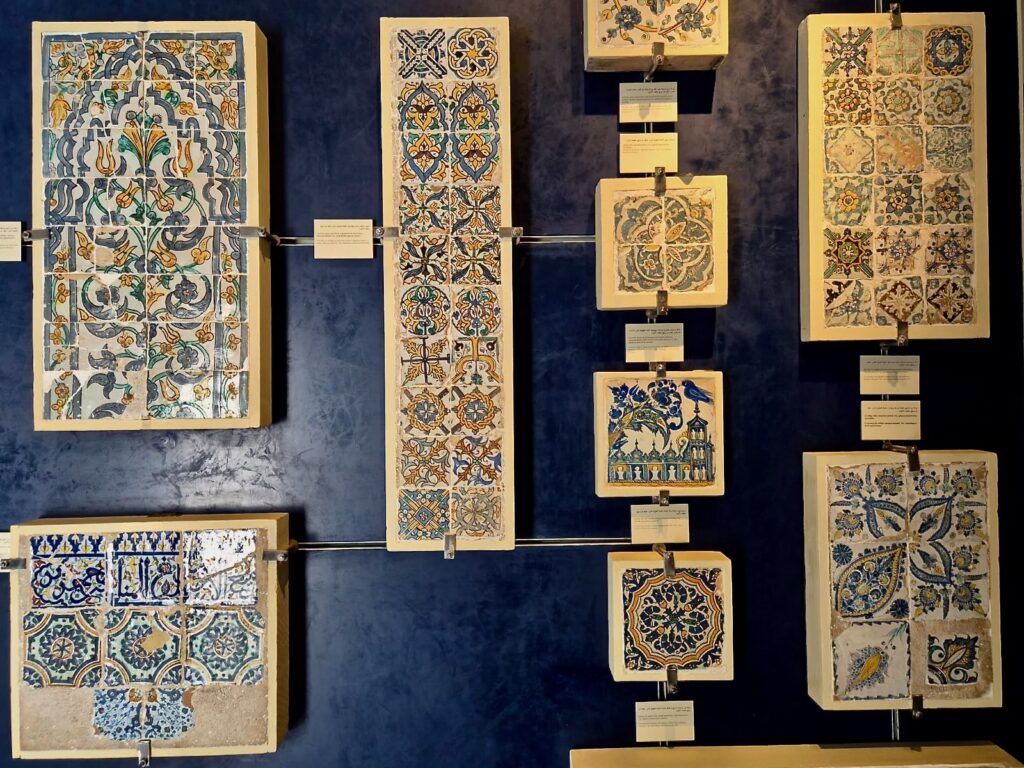
Dar Batha Museum of Islamic Arts in Fes is one example – it’s such a stunning complex with soooo much to see and only cost 60 MAD to enter. Also worth mentioning is the Nejjarine Museum of Wooden Arts & Crafts (also in Fes). It was only 30 MAD to enter on my last visit.
Most historic palaces, museums, gardens and madrasas in cities like Marrakech, Fes, Rabat and Tangier charge entrance fees. These range from 30 to 170 MAD (this is what it currently costs to enter Jardin Majorelle).
When it comes to activities in Morocco, you can pay anywhere from 500 to 1500 MAD for specialty experiences, such as cooking classes or hiking excursions.
Sahara activities can be surprisingly expensive – expect to pay anywhere from 400 MAD for an hour of quad-biking.
Meanwhile a hot air balloon flight with views of the Atlas Mountains will set you back around 1000 MAD. When you compare that to other places in the world that offer hot air ballooning, it’s actually quite cheap!
The good news is that some of Morocco’s most memorable experiences cost nothing at all: wandering through the medinas, listening to the call to prayer at sunset from a rooftop terrace and simply connecting with locals you meet along the way.
My advice would be to never undervalue these experiences – they’re often the most impactful and will stay with you long after you’ve left Morocco.
The Hidden Costs of Travelling to Morocco
So far I’ve covered the major expenses you’ll encounter in Morocco. But there are a few additional things to keep in mind.
Shopping
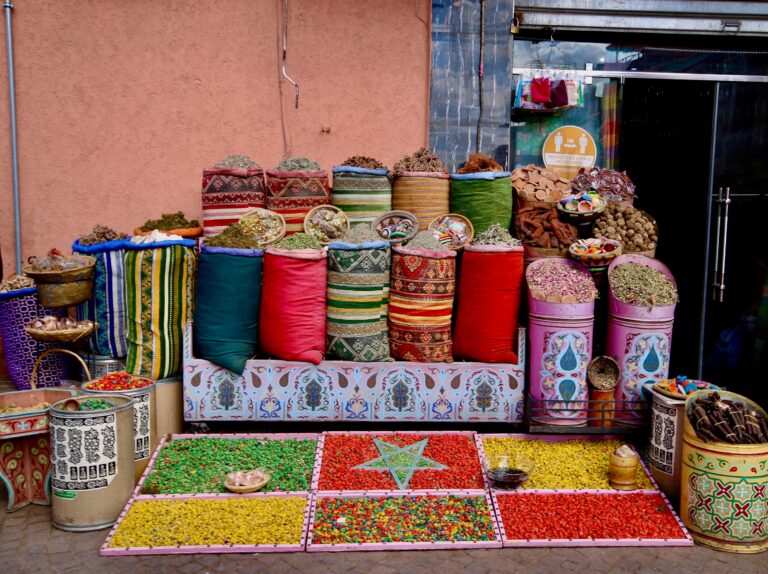
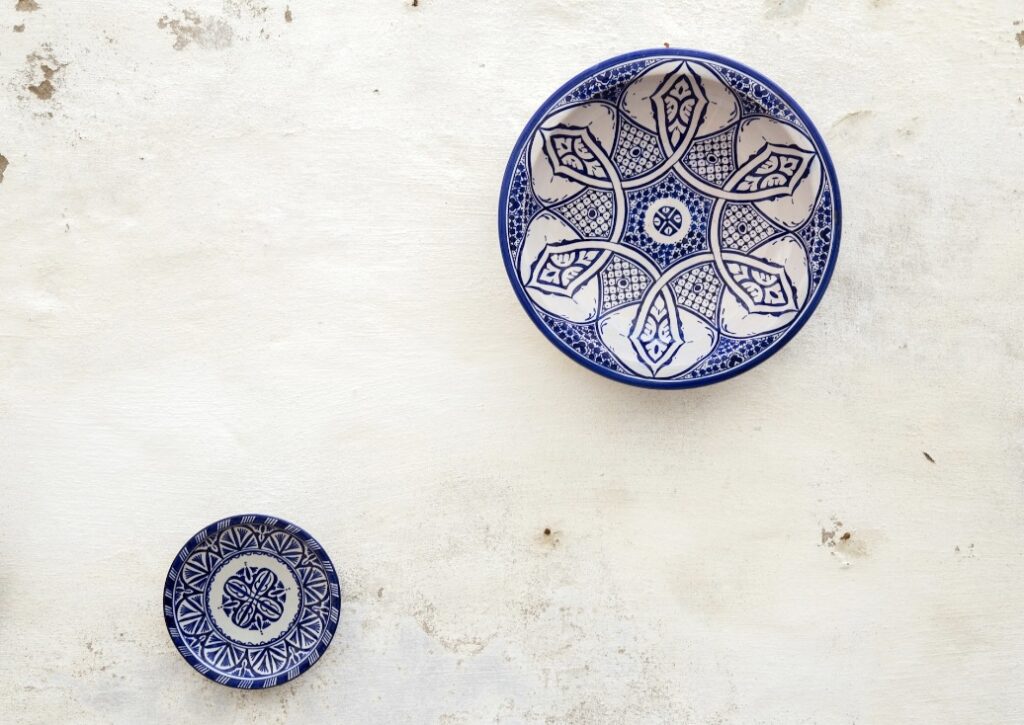
Morocco’s souks are legendary and it’s sooooo easy to end up spending way more here than you ever intended. From handwoven rugs to brass lanterns and beautiful ceramics, there’s so much to stuff into your suitcase for the journey home.
If you have a limited budget, then leave your shopping to the end of the trip (it also means you don’t have to lug your newly purchased goods around Morocco). That way, you won’t be compromising on experiences because you’ve run out of cash.
Plus, keep in mind any excess baggage fees you may incur on the trip home if you’re trying to bring heavy goods with you.
Tipping
While tipping is not wholly expected (as in the U.S.A.), it is becoming common in Morocco and I would say it’s now expected in some establishments, such as higher-end restaurants.
In other situations (taxis, casual eateries), it’s common practice to round prices up and the “tip” is usually expressed more as “keep the change”. It’s not a calculate-10%-of-the-total kind of thing.
It’s worth mentioning that salaries in Morocco for service workers are low – I know people who working incredibly hard and take home around 3500 MAD a month (that’s around 350 USD/EUR, depending on the exchange rate).
So if the budget you have allows you to tip or have a few “keep the change” moments, it is appreciated.
Tourist Pricing
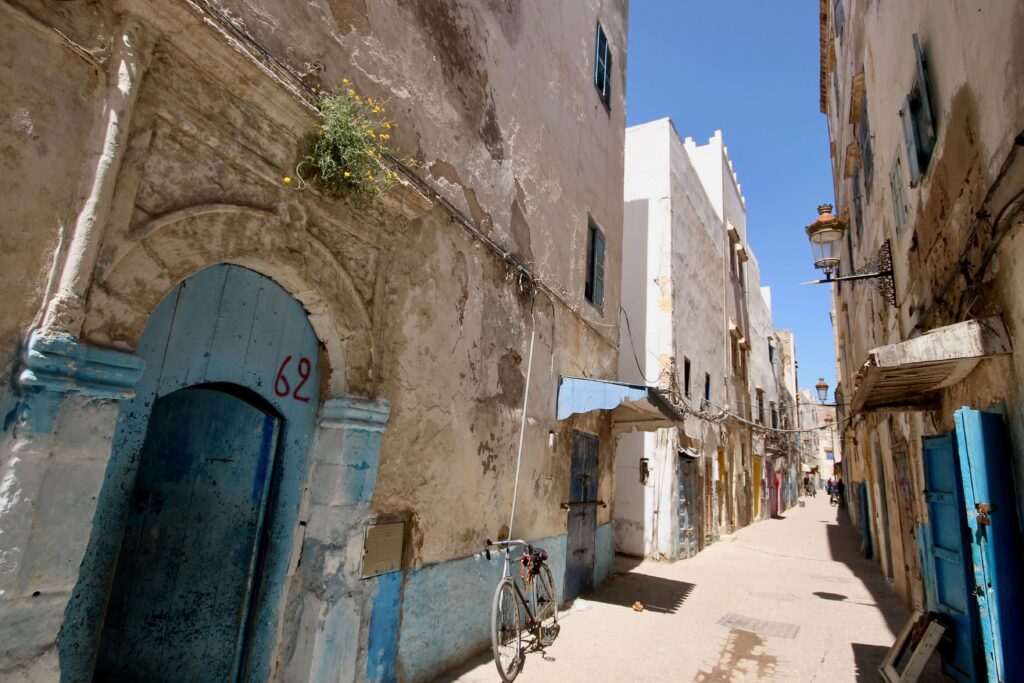
In tourist souks, prices will start higher for non-Moroccans. Haggling is customary, but vendors know they can probably get a little more out of tourists.
Good-natured bargaining (emphasis on the “good natured” bit) is part of the culture and learning this skill can save you a few dirhams. Vendors are usually more willing to drop their prices if you haggle with humour, respect and a smile.
You’ll also see official prices for Moroccans may be cheaper at museums and historic attractions. Personally, I think this is okay.
I feel incredibly lucky to earn a wage that allows me to travel and I’m not upset by being asked to pay more than a local who may be earning significantly less than me.
Travelling is a privilege and having countries share their culture with outsiders is something I’m incredibly grateful for…and willing to pay for.
A Realistic One-Week Budget for Morocco
If you were being mindful of your spending, staying at the lower end of the budget range and dining at local eateries, this is what a solo traveller might spend during a 7-day trip to Morocco:
Accommodation: 350 USD/EUR
Food: 175 USD/EUR
Transportation: 75 USD/EUR
Activities and attractions: 250 USD/EUR
Miscellaneous spending: 100 USD/EUR
Total: Approximately 950 USD/EUR
Once you add on a bit of shopping, I wouldn’t budget at least 1,200 USD/EUR.
Is Morocco Good Value for Solo Travellers?
Absolutely! Even with the price increases of recent years, I still think Morocco can offer an affordable vacation, especially when compared to much of Europe.
What’s more, I think the cultural experiences in Morocco often feel richer than their price tags and you don’t have to spend a lot to have a really rewarding time.
At the end of the day, only you know your individual spending habits and the level of comfort you desire.
But you can sleep in centuries-old riads, explore ancient medinas and spend a night in the Sahara without requiring a luxury-travel budget.
In my experience, those who enjoy Morocco the most aren’t necessarily the ones with the most cash to spare. They’re the ones who are curious, open-minded and ready to embrace the unexpected.
PLAN YOUR TRIP WITH MY FAVOURITE RESOURCES:
Find hotels via Booking
Book tours and attractions via Viator or GetYourGuide
Find a rental car via Discover Cars
Book flights via Kiwi or Booking
Search for buses and trains via 12Go or Omio
Get travel insurance via SafetyWing
Buy a digital eSIM with Airalo
By purchasing through my links, you’ll be supporting my website at no additional cost to you
-
Can You Travel Solo in Morocco Without Speaking French or Arabic?
If you’re travelling to Morocco with friends or family, chances are someone will have a few words of French or Arabic up their sleeve. And if you’re joining a guided tour, you’ll have a local guide to act as your Darija or Tamazight (Amazigh) translator. But what if you’re travelling independently (and solo) and know…
-
How Many Days Do You Need in Morocco? Solo Travel Itinerary Ideas
“How many days do I need in Morocco?” is a question I get a lot…and it’s not easy to answer. Morocco is one of those countries where you can spend a long weekend exploring a single city or several weeks travelling the length and breadth of the country. Take your pick! But if I’m talking…
-
Morocco Solo Travel FAQs + Honest Answers
After travelling around Morocco for the last 10+ years, I think it can be an incredibly rewarding country to explore independently. Public transport is great, there’s a huge variety of experiences on offer and the cultural insights are endlessly fascinating. That said, it might not be the easiest country for solo travellers, particularly if we’re…
-
How to Handle Unwanted Attention in Morocco Respectfully
Something that always saddens me when reading through Morocco travel forums is the number of people who report receiving unwanted attention in the country. While there are always people who respond saying this didn’t worry them or that it was on par with what they’ve experienced in other countries, there are enough people who feel…
-
Using SIM Cards and Mobile Data in Morocco: A Solo Traveller’s Guide
When I first started travelling in my early 20s, smartphones didn’t exist and the internet was still incredibly expensive to access. I remember paying 2 USD per minute to check my emails in Cuba! It was the era of “Lonely Planet”. Almost everyone bought/borrowed one of these legendary guidebooks and they were a mainstay of…
-
The Unexpected Lessons Morocco Has Taught Me
I came to Morocco looking for adventure and, if I’m being honest, to tick another country off my bucket list. Back in 2014, I booked a one-way ticket expecting to whizz around the country for a few weeks before continuing on to South America. I’d travelled around Southern Africa, East Africa and West Africa before,…

I’m Malika, an Australian-born travel writer with an intense love for Morocco. I first travelled here solo in 2014 and after meeting (and marrying) a local, I made this North African gem my home. Since that time, I have explored the country extensively, travelling to all corners with my partner, friends and on my own.
Morocco is an incredible destination and one that I think everyone who has the “travel bug” should experience. The scenery is spectacular, the medinas are enchanting and the locals are among the friendliest (and funniest) people I’ve ever met.
I also know that Morocco can feel intimidating for first-time solo travellers, especially given the amount of conflicting advice shared online. That’s why I’ve created this guide: to provide practical, balanced, and up-to-date advice based on my own experiences. My hope is that it helps you travel with confidence and enjoy everything this extraordinary country has to offer.