Using SIM Cards and Mobile Data in Morocco: A Solo Traveller’s Guide
When I first started travelling in my early 20s, smartphones didn’t exist and the internet was still incredibly expensive to access. I remember paying 2 USD per minute to check my emails in Cuba!
It was the era of “Lonely Planet”. Almost everyone bought/borrowed one of these legendary guidebooks and they were a mainstay of travel planning, before and during trips.
At every hostel, there were backpackers absorbed in their Lonely Planet, reading up on the destination’s history and culture, planning the following day’s activities or selecting accommodation for their next stop.
I remember feeling like I’d struck gold if I didn’t have my own Lonely Planet and I happened to stumble upon one in a hostel’s shared library. The rest of that night would be spent feverishly writing down notes about where I was heading next.
Once you were out and about exploring your travel destination, you either had to rely on physical maps (sometimes in the aforementioned guidebook), your in-built navigation skills or those hand-written notes you’d made the night before. Sometimes I was out there on a wing and a prayer!
These days, things are completely different. We have soooo much information at our fingertips and in our phones. Honestly, 23-year-old me wouldn’t believe it
Staying connected and informed while travelling is easier than ever…and Morocco is no exception. Whether you want assistance navigating medinas, checking train schedules or translating English to Darija, having reliable mobile data can make your trip soooo much easier.
That’s not to say I don’t miss the “good old days”. It was the best of times, it was the worst of times. No, just kidding – it really was the best of times!
But I completely understand that for solo travellers, having a local SIM card or eSIM can provide peace of mind. There’s confidence knowing you have a connection if you get lost or find yourself in a situation you can’t sort out alone.
With data, calls and messages on your phone, you can access maps when you need them, contact accommodation hosts to make last-minute changes and research places to visit without relying on finding Wi-Fi. You can also notify friends/family of your exact location…for their peace of mind.
The good news is that Morocco has affordable mobile data options, good coverage in most tourist areas and several easy ways to get connected. Read on to find out everything you need to know.
Disclosure: This article may contain affiliate links, meaning I earn a small commission when you make a purchase. Affiliate links cost you nothing and ensure my content stays free!
Do You Need a SIM Card in Morocco?
While almost all hotels and riads in Morocco offer Wi-Fi (and some cafes and restaurants too), relying entirely on public networks is not always convenient.
Having your own mobile data is useful for:
- Using Google Maps or offline navigation apps
- Booking taxis and transport on-the-go
- Translating menus and signs
- Checking opening hours and directions
- Contacting hotels, tour operators and hosts when you’re away from Wi-Fi
- Sharing travel updates and locations with friends/family
- Accessing online banking securely
That said, I don’t think you necessarily need a SIM card in Morocco. It’s a personal choice. You can get around without having your smartphone “save” you, but you need to be a little more organised with your planning.
If you’re travelling solo, I think having a means of connection is particularly valuable and there’s peace of mind knowing that you can contact someone if you do end up in a challenging situation.
Getting lost in a busy medina can be part of the adventure. But being able to quickly check your location can make exploring much less stressful.
At the end of the day, it depends on the type of traveller you are, how much planning you want to do on-the-go and how confident you are in your navigation skills.
Morocco’s Main Mobile Network Providers
Morocco has three main mobile network providers and all offer (relatively affordable) prepaid SIM cards with data packages suitable for travellers.
The “best” choice depends on where you are travelling, how much data you need and whether your priority is coverage or price…and who you speak to!
The “best” network provider is a hotly contested topic in Morocco. I know of locals who use all three for different purposes. The “best” for someone in one city might be the “worst” for someone in another.
It’s important to remember that technology is constantly improving. So long-held ideas about “X being best for coverage” is changing as infrastructure improves.
With that said, Morocco’s mobile market is served primarily by Maroc Telecom, Orange and inwi, all of which offer LTE services and prepaid options. Here’s a general roundup of what each offers.
Maroc Telecom
Maroc Telecom (also known as IAM) is the country’s largest telecommunications provider and has a reputation for offering the widest coverage, including rural areas and desert regions. It also tends to be the most expensive.
But if you’re travelling beyond major cities, such as trekking in the Atlas Mountains or overnighting in the Sahara Desert and want to stay connected the entire time, Maroc Telecom is considered by many to be one of the most reliable choices.
Orange Morocco
Orange offers good coverage in cities and most urban tourist destinations, and is usually more affordable than Maroc Telecom. That said, it’s rural coverage can be lacking, but that all depends on where you go.
inwi
inwi offers competitive prices and prepaid data packages, and it’s popular with anyone looking for a budget-friendly option. Some travel bloggers say that inwi offers the best coverage, but not many locals I’ve spoken to agree with this.

SIM Cards & Mobile Data Comparison
| Feature | Maroc Telecom | Orange Morocco | inwi |
| Best for | Travellers exploring beyond major cities | Tourists wanting easy setup and flexible plans | Budget travellers looking for affordable data |
| Network coverage | Generally considered the strongest option for rural areas, mountains and remote regions | Strong coverage in cities and popular tourist destinations | Good coverage in populated areas, with improving network reach |
| Price level | Usually mid-range | Usually mid-range | Often one of the cheaper options |
Top Tip:
If you’re travelling with a friend(s), consider getting SIM cards from different providers. That way, if you don’t have coverage with one, you might with another.
Where to Buy a SIM Card in Morocco
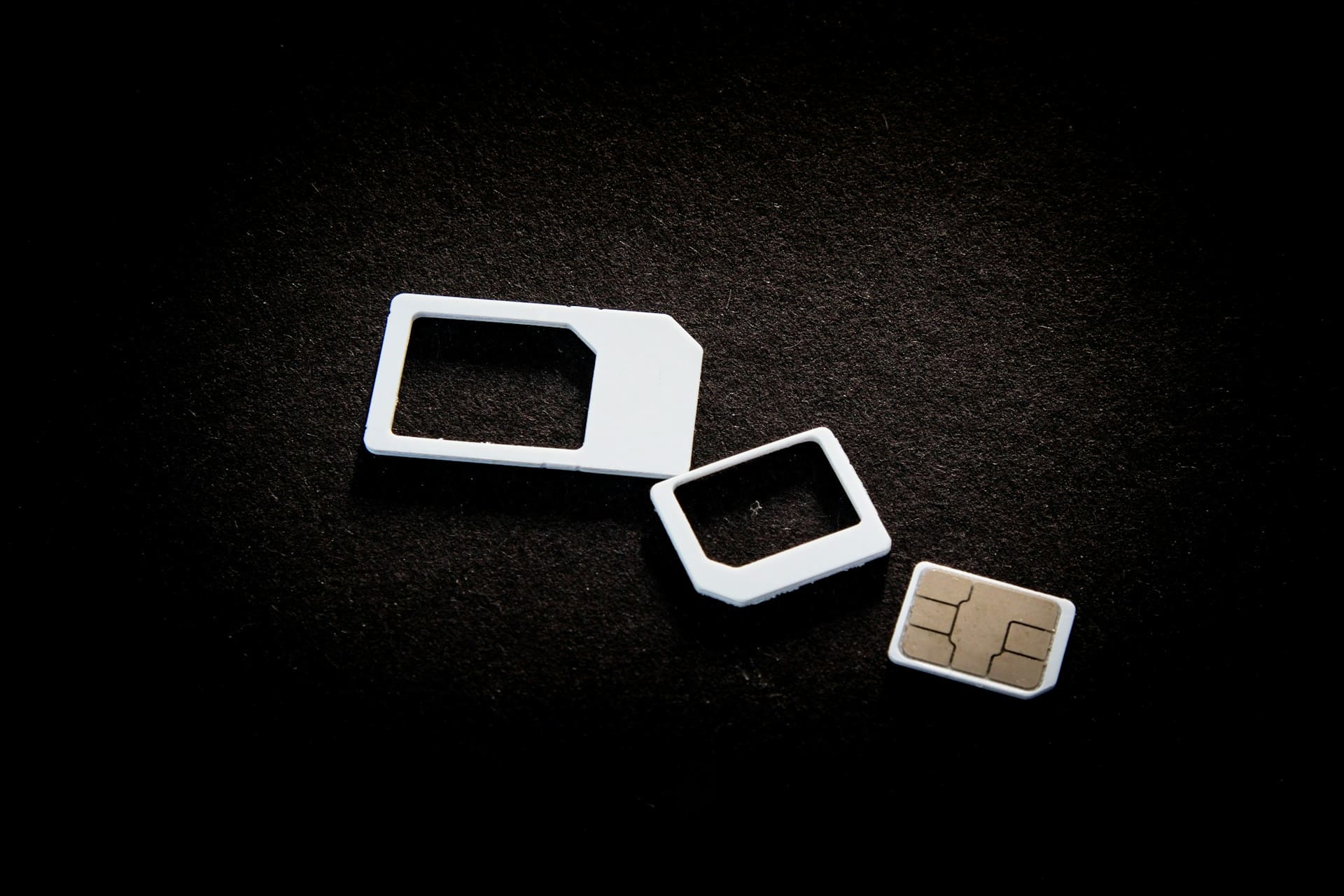
Getting a Moroccan SIM card is relatively simple. You can buy one from:
Airport Shops
Major airports, including Marrakech Menara Airport and Casablanca Mohammed V International Airport, have SIM card stands in the baggage claim hall. They’re really obvious – you can’t miss them!
If I’m not in a rush, I usually buy mine here. It only takes a couple of minutes to get registered and they’re open 24/7, so you can grab a SIM no matter what time you arrive. Also, they take international credit/debit cards – it’s all very straightforward.
Buying your SIM on arrival is convenient because you can connect immediately and contact a driver or whoever is picking you up via WhatsApp.
Some people say that airport prices are more expensive, but I don’t think that’s the case. Staff may try to encourage you to buy more expensive plans. But provided you stick with what you need (and don’t upgrade unnecessarily), you’re going to pay the same price as at a city store.
Official Telecom Stores
Sometimes (especially when I’m flying in from Australia), I’m simply too jet lagged on arrival to deal with SIM card purchases. Other times, there’s a queue at the booths and I don’t have the energy to stand around and wait.
If that’s the case, I’ll buy a SIM the next day at a city store, once I’m rested and ready to make mobile/data decisions.
You’ll find official Maroc Telecom, Orange and inwi stores in all of Morocco’s major cities and in many towns too. Here, staff will walk you through the various data packages available, register and activate your SIM and ensure everything’s working before you leave the store.
Corner Stores
While you can buy prepaid SIM cards at corner stores (which are on almost every corner in Morocco), there’s the issue of registration. By law, all SIM cards in Morocco must be registered (usually with your passport) and corner stores won’t always have the systems in place to do this.
Personally, I wouldn’t purchase a new SIM at a corner store – stick with an official provider store. I do, however, use corner stores to buy rechargeable scratch cards to top up my data/minutes once my SIM is active.
What Documents Do You Need?
Morocco requires SIM cards to be registered, so you will need to show your passport when making your purchase. Usually, the staff member will take a copy and record all of your ID details on the registration form. You just have to be patient while they do this.
However, this is not the case if you’re purchasing a SIM card from a roaming vendor in the street. For this reason, I advice against it, no matter how cheap it might be.
Make sure your phone is unlocked before travelling. A locked phone connected to another carrier will probably not accept a Moroccan SIM card.
How Much are Mobile/Data Plans in Morocco?
Morocco’s SIM providers are always offering different deals, so there’s no fixed price when it comes to purchasing a mobile/data plan.
For this reason, it’s best to check current offers directly with the provider when you arrive…or do a little online research before you depart home.
Generally speaking, you’ll pay around 20 MAD for 2GB or 100 MAD for 100GB and how long that is valid for will depend on the provider.
Most also offer prepaid tourist plans that are valid for 14 days or 30 days and these are a good option if you want unlimited calls, SMS and data.
Personally, I usually stick with a moderate data package and just use it for messaging, travel bookings and maps when I’m on the go. For everything else (video calls, streaming, extensive internet searches), I’ll use the Wi-Fi at home or a hotel/riad.
Top Tip:
Before buying any phone/data package in Morocco, check that it is pre-paid. If it’s post-paid (and they have your credit/debit card details), it will automatically renew each month.
For a multi-month stay, this isn’t an issue. But for shorter trips, it can be annoying having to cancel the auto-renewal.
Using an eSIM in Morocco
For travellers with compatible phones, an eSIM can be a convenient alternative to buying a physical SIM card. You can set it up before you depart home (no need to visit a store when you arrive in Morocco) and you don’t need to carry/install a physical SIM.
Personally, I think eSIMs are a great option if you’re only in Morocco on a short trip – they’re really convenient and give you immediate connectivity from the moment you arrive.
That said, local Moroccan SIM cards usually offer better value for longer stays or if you want larger amounts of data.
What Is an eSIM?
An eSIM is a digital version of the traditional plastic SIM card used in mobile/cell phones. Instead of physically replacing your SIM card, you download a mobile network profile directly onto your device.
Many newer smartphones support eSIM technology, including recent models from Apple, Samsung and Google. That said, not all models do, so check first.
If your phone does support an eSIM, you can purchase a Morocco data plan online, install it before your trip and connect to a mobile network as soon as you arrive. This removes one of the (small) hassles of arriving in a new country, namely finding a mobile phone shop, choosing a provider and navigating the registration process.
Global eSIM companies like Airalo partner with local mobile providers (Maroc Telecom, Orange or inwi) – they’re not building their own cell towers all over the country! So you still need to make a decision about which provider you want to use.
Aside from international eSIM providers (such as Airalo, which uses the Orange Morocco network), you can also purchase eSIMs directly online with all three of Morocco’s telecommunications companies.
eSIMs can be purchased via the Maroc Telecom e-boutique or the Orange Travel website. Win by inwi is the company’s digital brand and technically you can purchase eSIMs here, although I can never get the website to work.
One of the great things about using an international eSIM company like Airalo is that it offers global prepaid data plans in over 200 countries. It’s a great option you’re a frequent traveller and Morocco is just one of many countries you plan on visiting in the next little while.
Mobile Coverage Across Morocco
Coverage in Morocco is generally good in major cities, although there are a few “black spots” and places where speeds feel incredibly slow. I’ve had this with all three providers, so it’s not a case of simply spending more with Maroc Telecom and you’ll eliminate the issue.
Coverage definitely becomes less consistent in remote mountain and desert areas, as well as in isolated rural villages. If you’re travelling to any of these places, I wouldn’t rely on having consistently good coverage. Instead, download any important info you need before leaving areas with strong reception.
Top Tip:
If you’re heading into a remote area for a few days and having coverage is important to you, stop in at a corner store in the closest town. The owner will be up to date with the latest on which provider offers the best coverage for the area you’re heading into.
Tips for Using Mobile Data in Morocco
Download Offline Maps
Even with a local SIM card, it’s smart to download offline maps before heading out to explore. That way, you won’t end up using loads of data while you’re out and about.
It’s important to remember that even online maps get lost in Morocco’s medinas (trust me, I’ve had it happen multiple times). But they’ll always find your location eventually – sometimes you just have to be a bit patient.
Use WhatsApp for Communication
WhatsApp is widely used in Morocco, including by hotels, riads, restaurants and tour operators. It’s more likely they will ask for your WhatsApp when you book/register, so it’s a good idea to set up an account before you travel.
That way, even if you have a data-only plan (that doesn’t include calls), you can communicate easily with local businesses via WhatsApp.
Turn Off Data Roaming
Before inserting a Moroccan SIM card, disable data roaming on your home SIM to avoid unexpected (and hefty) charges.
If you’re using an eSIM, check your settings carefully to ensure you are using the correct data line.
Staying Connected in Morocco as a Solo Traveller
I’m a big fan of travelling “old school”, without relying on my smartphone when I’m out and about.
But I understand that lots of people love the convenience of having information at their fingertips and I can see there’s added peace of mind when you’re travelling solo.
A local SIM card or eSIM gives you the freedom to explore Morocco confidently and navigate unfamiliar places without the risk of getting lost beyond return. It also allows you to make travel plans on the go and communicate with hotels/tour providers while you’re on long-distance bus or train trips.
PLAN YOUR TRIP WITH MY FAVOURITE RESOURCES:
Find hotels via Booking
Book tours and attractions via Viator or GetYourGuide
Find a rental car via Discover Cars
Book flights via Kiwi or Booking
Search for buses and trains via 12Go or Omio
Get travel insurance via SafetyWing
Buy a digital eSIM with Airalo
By purchasing through my links, you’ll be supporting my website at no additional cost to you




I’m Malika, an Australian-born travel writer with an intense love for Morocco. I first travelled here solo in 2014 and after meeting (and marrying) a local, I made this North African gem my home. Since that time, I have explored the country extensively, travelling to all corners with my partner, friends and on my own.
Morocco is an incredible destination and one that I think everyone who has the “travel bug” should experience. The scenery is spectacular, the medinas are enchanting and the locals are among the friendliest (and funniest) people I’ve ever met.
I also know that Morocco can feel intimidating for first-time solo travellers, especially given the amount of conflicting advice shared online. That’s why I’ve created this guide: to provide practical, balanced, and up-to-date advice based on my own experiences. My hope is that it helps you travel with confidence and enjoy everything this extraordinary country has to offer.