Can You Travel Solo in Morocco Without Speaking French or Arabic?
If you’re travelling to Morocco with friends or family, chances are someone will have a few words of French or Arabic up their sleeve. And if you’re joining a guided tour, you’ll have a local guide to act as your Darija or Tamazight (Amazigh) translator.
But what if you’re travelling independently (and solo) and know for a fact that you don’t speak a word of any Moroccan languages? Does that mean you shouldn’t go or that you should reconsider travelling solo to Morocco?
Personally, I think you can absolutely travel solo in Morocco without speaking the local languages and you might be surprised by how many Moroccans speak English. I didn’t speak any Darija when I first arrived and my French was so rusty that it hardly counted.
But I managed to get around using public transport, check in and out of accommodation and experience all of the things I wanted to experience.
So am I suggesting you do the same? Not exactly! I wish I had learned some Darija or Tamazight before I arrived, because I think it’s polite to try and connect with people in their language…even if you’re not very good at it!
That said, you definitely don’t need to be fluent in either French or Darija to have an incredible time in Morocco. And if English is your only language, you’ll likely be just fine.
That said, travelling without a shared language can occasionally be challenging, and this article is all about helping you prepare for all the different situations you might find yourself in.
Disclosure: This article contains affiliate links, meaning I earn a small commission when you make a purchase. Affiliate links cost you nothing and ensure my content stays free!
What Languages Are Spoken in Morocco?
Morocco is a multilingual country and understanding its linguistic landscape will help you know what to expect. I can attest to the factor that many Moroccans are linguistically talented and they will revert to whatever language you are most comfortable in.
Darija (Moroccan Arabic) and Amazigh (also known as Tamazight or Berber) are Morocco’s official languages. Darija is widely used in everyday conversation, while Tamazight is a group of Indigenous languages spoken across various regions, including parts of the Atlas Mountains, the Rif and around Agadir.
French is widely used in business, education and many service industries (if you go into government offices or banks, the staff will likely speak French). Meanwhile, Spanish is more common in parts of the north, such as Tangier, Tetouan and Chefchaouen, and English is increasingly common in popular tourist destinations like Fes, Marrakech and Essaouira.
Can You Get By With English Alone?
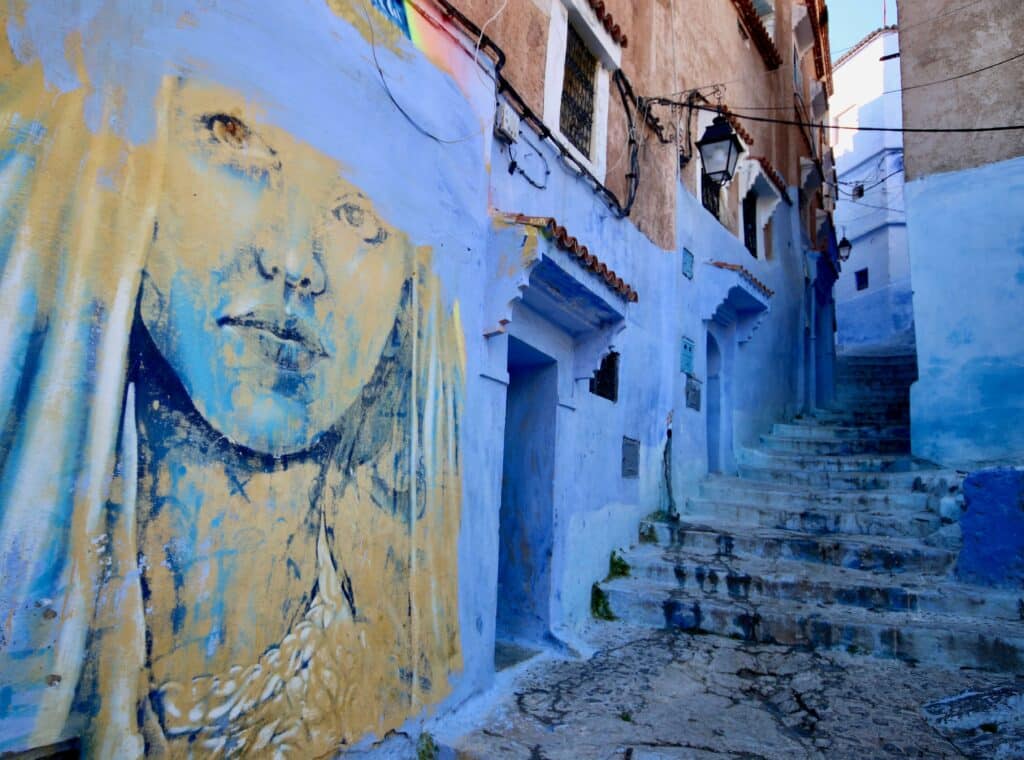
I think so, particularly if you’re following a well-established tourist route. In my experience travelling to places like Marrakech, Fes, Essaouira and Chefchaouen, most people working in tourism can communicate in English, particularly in riads, restaurants and organised excursions.
That said, it’s important not to assume that everyone will speak English or expect them to communicate in your language. Some people may understand only a few words, while others may be more comfortable speaking in French, Darija or Amazigh.
Personally, I think it’s polite to try and speak a few words in Darija (or Amazigh) before switching to a language that suits you both (perhaps that’s French, Spanish or English). And if you don’t have a common language, there’s often someone nearby (in the souk or at a railway station) who can step in to translate for you.
Once you get out to more remote and rural areas of Morocco, it becomes trickier if English is your only language. But that’s not to say it’s impossible. There are several Darija translation apps now available, such as MoroAI Translate or GoDarija, that you can download for use.
I’d also recommend keeping important information written down somewhere offline, such as accommodation addresses and transport destinations. That way, you’re not relying entirely on spoken directions…or an internet connection.
And at the end of the day, hand gestures and a sense of humour can go a long way in understanding others, even if you don’t have a shared language.
How Easy Is It To Travel Around Morocco Without French or Darija?
The practicalities of getting around Morocco without French or Darija depend on your transport method and destination.
For example, trying to negotiate prices with a non-English-speaking taxi driver is going to be trickier than booking a train ticket online, then simply turning up at the station and finding your platform. Even if you get lost, you can always show your ticket to a staff member and they’ll point you in the right direction.
Intercity buses are another great option for solo travellers, particularly if you’re heading to destinations beyond the rail network. Companies such as CTM and Supratours serve many popular tourist routes and both have booking websites that are easy to navigate as an English speaker (CTM’s is easier than Supratours’ in my opinion).
Moroccan bus stations can be a little more chaotic than train stations (depending on your departure point). But it’s usually easy enough to figure out where you need to go and the buses always have their destination displayed at the front. Again, just show someone your ticket if you’re not sure.
Taxis can be more challenging without French or Darija because you may need to explain a destination, agree on a fare or clarify where you want to be dropped off.
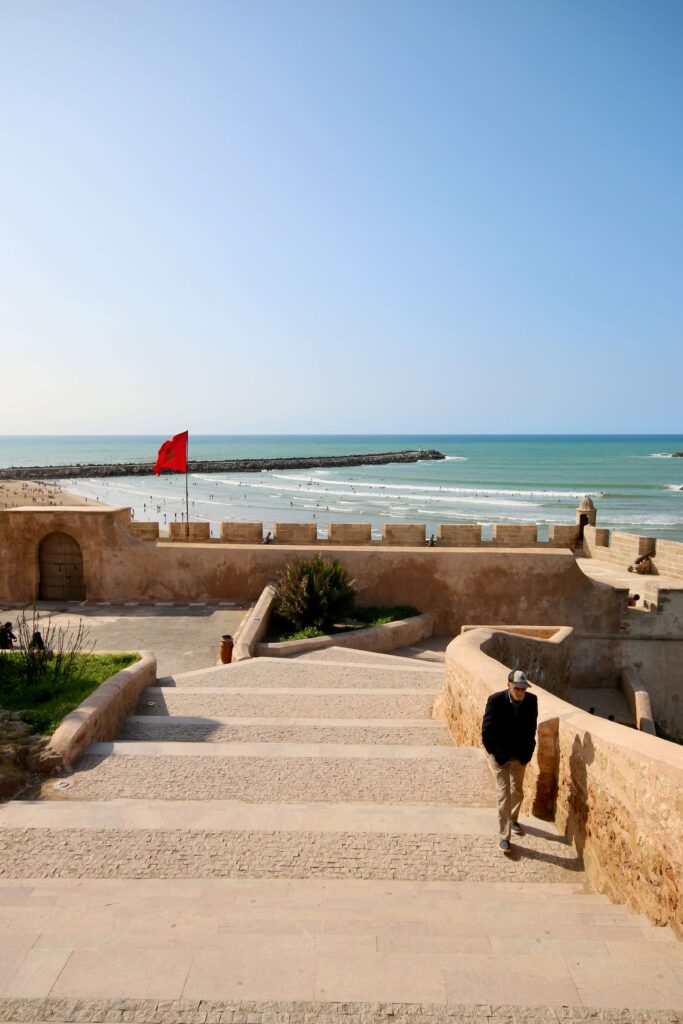
I remember arriving in Rabat by bus and asking a taxi driver to take me to “the medina”. Of course, there are several medina entrances and I hadn’t checked the closest one to my accommodation.
He was so understanding about my oversight and asked for the phone number of my accommodation. While driving, he rang them and asked which “bab” was closest, then dropped me there.
If you need to use taxis for airport or station transfers, always have the destination address written down or a location pin on your phone. And if you’re trying to reach a riad inside a medina, check the closest gate online (while you have a connection) and ask to be dropped there.
If it’s not a fixed price journey, agree on the price before setting off.
If all of this sounds too much, organise a transfer with your accommodation. It may be slightly more expensive, but they will explain everything to the driver on your behalf.
For destinations that are difficult to reach independently, such as the Sahara Desert or Atlas Mountains, I’d highly recommend joining an organised excursion. The logistics are so much easier!
Simply go to GetYourGuide or Viator, type in your destination and find tours in your language.
I know that organised tours aren’t for every traveller and I’m not suggesting you do your entire Morocco trip with a guided group. But they’re a great option when the alternative involves complicated transfers or limited transport connections.
And in rural areas where English isn’t widely spoken, you’ll benefit from having a translator and all the cultural context your guide can provide.
Finding Accommodation in Morocco Without Speaking French or Darija
With everything from kasbah hotels to sustainable riads and luxury desert camps, the accommodation in Morocco is really something special.
In my experience, many accommodation hosts speak English and they can help with everything from directions to restaurant recommendations, transport arrangements and local advice.
Larger hotels usually have multilingual staff and they’ll speak whatever language you speak (or find someone who does). Even smaller hotels in remote areas often have staff who speak English.
On occasion, I’ve arrived at a rural guesthouse when the host wasn’t there – perhaps they ducked out to the shops or to attend to family – and the kitchen or cleaning staff left in charge didn’t speak English or French.
But they always welcomed me warmly, prepared tea and showed me to my room. Then once the host returned, I was able to ask any complicated questions I had.
Chances are, your first night in Morocco isn’t going to be in a remote or rural area – it’s more likely you’ll be staying in a major city like Marrakech or Casablanca. And chances are, the reception staff will speak English.
But if you’re worried about getting to your accommodation in a taxi or negotiating the medina on foot, then email the staff to arrange an airport transfer for you.
Always save your accommodation’s name, address and phone number somewhere in your phone or have it written down in case your battery dies. That way, you can show the details to a taxi driver or ask someone to help you find the location.
Eating Out in Morocco Without Speaking French or Darija
Whether you’re dreaming about spiced tagines, steaming bowls of harira or grilled seafood, Morocco has a lot to offer solo travellers when it comes to dining out (check out some of the must-try dishes here).
And the truth is, you don’t need to speak French or Darija to enjoy the experience, especially in popular tourist destinations.
Most restaurants catering to international visitors have English menus and they’re usually displayed out the front. That way, you can flip through before making a decision to dine there….and know what price you’ll be paying!
However, smaller neighbourhood restaurants and local cafes might not have English menus…or they might not have menus at all. At some places, the tagines are already in the process of being cooked and the staff will lift the lid so you can see what’s inside. Just quietly, these are some of the best tagines I’ve ever eaten!
If you’re staying in remote or rural areas, most guesthouses and auberges offer meals onsite (half or full-board rates are available). Often these menus have a limited selection (tagines, couscous, maybe kebabs) but the home cooking is really good. And they can usually accommodate dietary requests if you give them advance notice.
At places like this, it’s best to order dinner a few hours ahead of time so the kitchen staff have time to buy the ingredients and prepare the dishes. If you think you’ll be arriving late in the afternoon or early evening and want to dine in that night, send through your request via email or phone to guarantee a meal.
Shopping in the Souks Without Speaking French or Darija
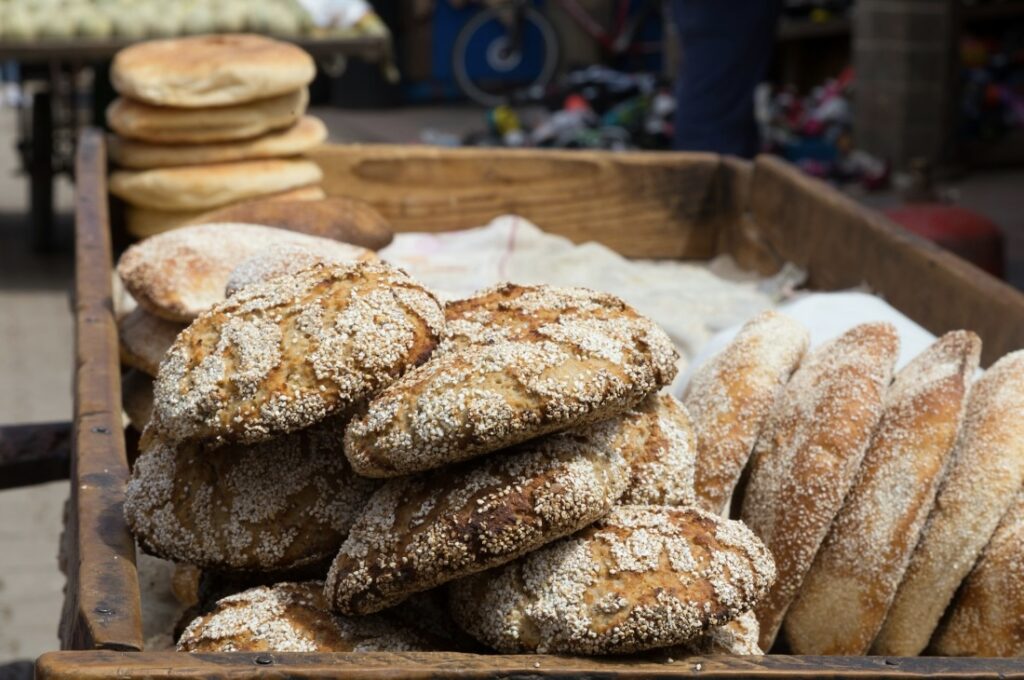
Shopping in the souks is one of those quintessential Moroccan experiences, with stalls selling everything from handwoven rugs and leather bags to ceramics, spices and traditional lanterns. But with no fixed prices and the expectation to haggle, it’s not as simple as handing over the amount of money indicated on a price tag.
That said, it’s also not that tricky to shop in Morocco’s souks if you don’t speak French or Darija. Most vendors speak enough English to facilitate some bargaining, and if you’ve got more complex questions that get lost in translation (such as care instructions or the origin/maker of an item), there’s usually someone nearby who can answer them.
In remote or rural parts of Morocco where English isn’t so widely spoken, it’s useful to have the calculator on your phone handy. That way, if a seller quotes a price, you can enter a counteroffer on your phone and show the amount. It avoids any confusion.
And remember, bargaining in Morocco is not about getting the lowest price possible – it’s not a competition! It’s about coming to an agreement that works for everyone involved – you, the vendor, the artisan – and having some friendly banter (even if it’s in different languages) in the process.
Using Translation Apps in Morocco
These days, a translation app is one of the most useful tools you can have when travelling anywhere in the world and Morocco is no exception. It doesn’t replace having a purely human conversation, but it can be incredibly handy.
As mentioned above, there are now several Darija translation apps available. Check out MoroAI Translate or GoDarija.
Just a heads up: Don’t rely on Google Translate because (at the time of writing) it does not support Moroccan Darija, only Modern Standard Arabic.
Just keep in mind that translation tools generally work better when you avoid slang, complicated expressions and long explanations. Keep sentences short and simple for the most accurate results.
Some translation apps also allow you to save audio translations, so you can go back and reference them whenever you need them.
Useful French and Darija Phrases for Solo Travellers
I’d be a hypocrite if I said you need to memorise a phrasebook before visiting Morocco. Because I certainly didn’t!
But learning a few basic expressions can go a long way – most people will appreciate your effort, no matter how bad your pronunciation might be!
The following phrases are a useful starting point. If I had to pick one language to learn, it would always be Darija – it’s far more widely spoken in rural areas, even ones where Tamazight is predominant. You’ll find more helpful Darija phrases here.
| English | Darija | French |
| Hello | Salam | Bonjour |
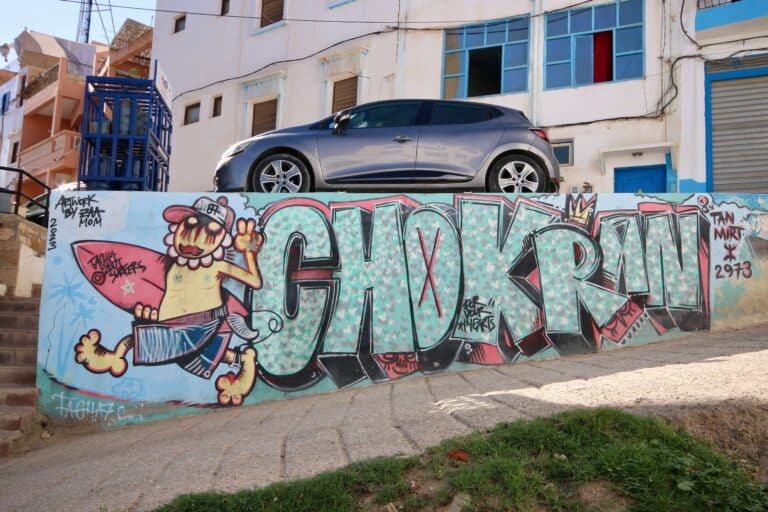
| Thank you | Shukran / Chokran | Merci |
| Please | Afak | S’il vous plaît |
| Yes | Ah / Iyyeh | Oui |
| No | La | Non |
| No, thank you | La, shukran | Non, merci |
| Goodbye | Bslama | Au revoir |
| How much is it? | Bshhal? | C’est combien ? |
| Where is…? | Fin kayn…? | Où est… ? |
| I don’t understand | Mafhemtsh | Je ne comprends pas |
| The bill, please | L’addition, afak | L’addition, s’il vous plaît |
Is it Harder to Travel Solo in Rural Morocco Without French or Darija?
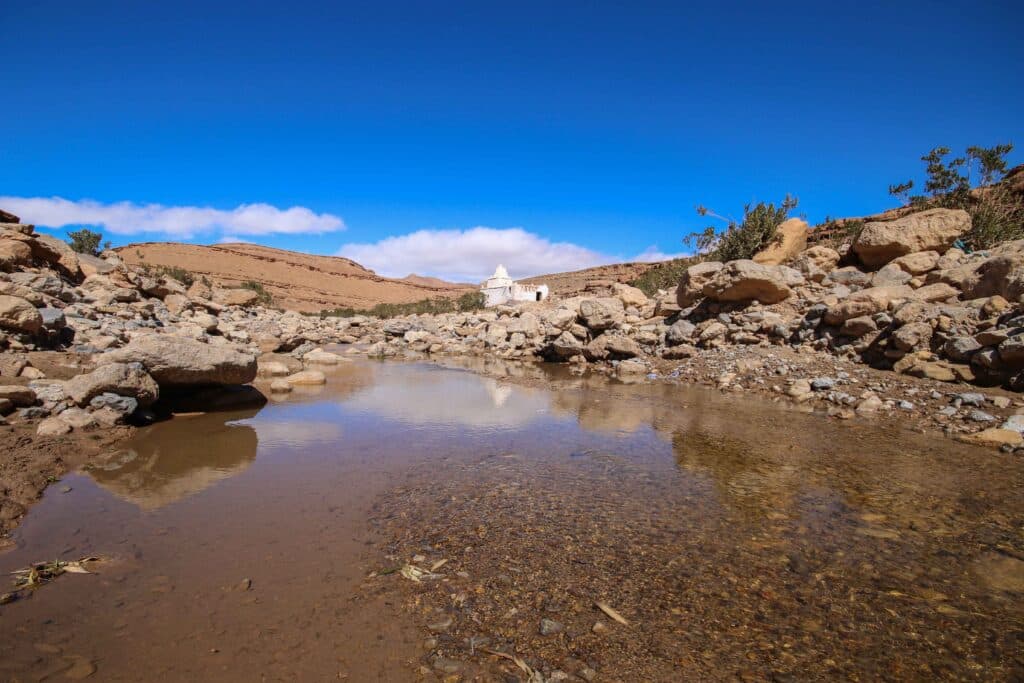
In major Moroccan cities and tourist destinations, you’re far more likely to encounter English-speaking accommodation staff, guides and service providers. In smaller towns, mountain villages and less-visited corners of the country, English is usually less common, particularly amongst the older generation.
This doesn’t mean you should avoid rural Morocco. In my opinion, some of the country’s most incredible experiences are found beyond its major cities.
But the truth is, it can be more difficult to access these areas independently due to limited transport options. In many cases, going with a local guide is not just convenient for communication, but it’s logistically far easier.
If you are planning on travelling to remote or rural areas of Morocco solo and are nervous about the language barrier, I’d suggest keeping the first part of your trip on the beaten tourist track. Then, once you’ve become comfortable with navigating public transport, ordering food and finding your way around, you’ll have the confidence to travel beyond.
PLAN YOUR TRIP WITH MY FAVOURITE RESOURCES:
Find hotels via Booking
Book tours and attractions via Viator or GetYourGuide
Find a rental car via Discover Cars
Book flights via Kiwi or Booking
Search for buses and trains via 12Go or Omio
Get travel insurance via SafetyWing
Buy a digital eSIM with Airalo
By purchasing through my links, you’ll be supporting my website at no additional cost to you


I’m Malika, an Australian-born travel writer with an intense love for Morocco. I first travelled here solo in 2014 and after meeting (and marrying) a local, I made this North African gem my home. Since that time, I have explored the country extensively, travelling to all corners with my partner, friends and on my own.
Morocco is an incredible destination and one that I think everyone who has the “travel bug” should experience. The scenery is spectacular, the medinas are enchanting and the locals are among the friendliest (and funniest) people I’ve ever met.
I also know that Morocco can feel intimidating for first-time solo travellers, especially given the amount of conflicting advice shared online. That’s why I’ve created this guide: to provide practical, balanced, and up-to-date advice based on my own experiences. My hope is that it helps you travel with confidence and enjoy everything this extraordinary country has to offer.